The flower that rises does not foresee its own fall. It grows, expands, and seeks light, warmth and closeness. It opens because that is the only way to exist. There is a strange coincidence between a flower and a body. We live leaning towards what we have not yet touched, and it is this inclination that shapes our bodies, alters their forms and determines the timing of all things.
The second exhibition in the “Dobra” cycle, Vergado Desejo, brings together Vítor Serrano’s photographs and Helena Vieira’s beeswax sculptures to explore a deeply human condition: the constant pursuit of desire. The interest lies in what happens when two distinct practices come to occupy the same space and accept each other’s influence, where dialogue is built
through presence, proximity and transformation.
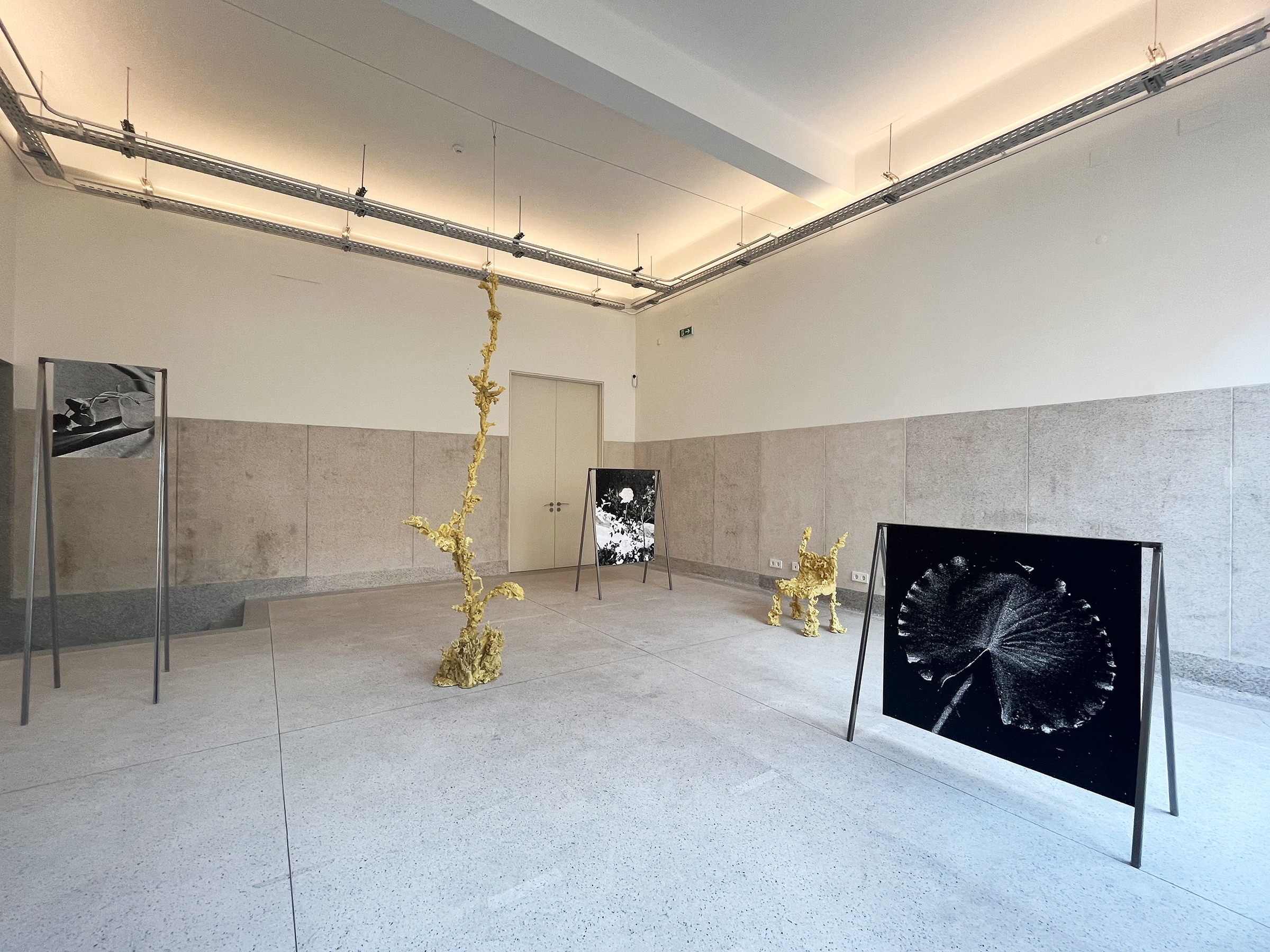
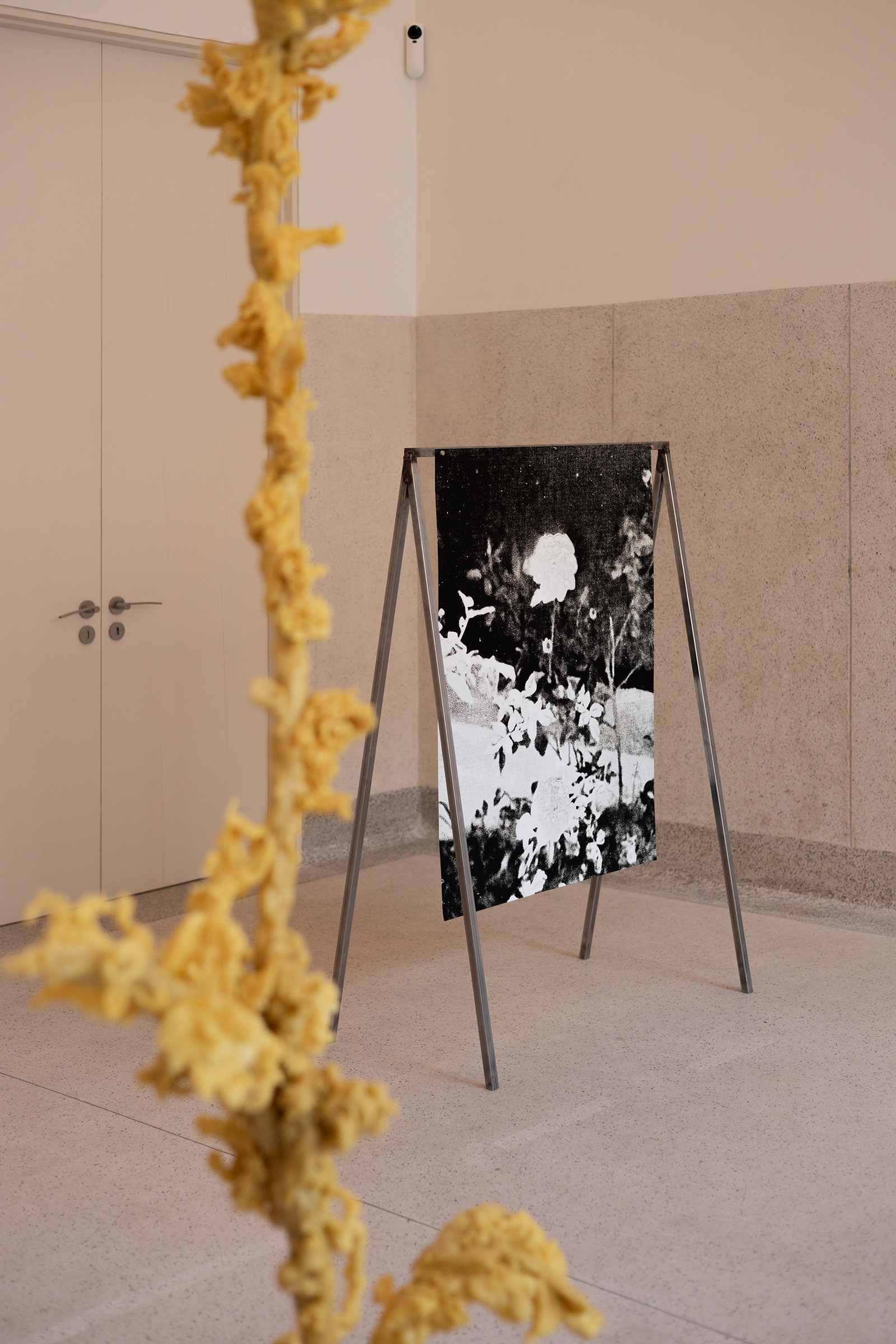
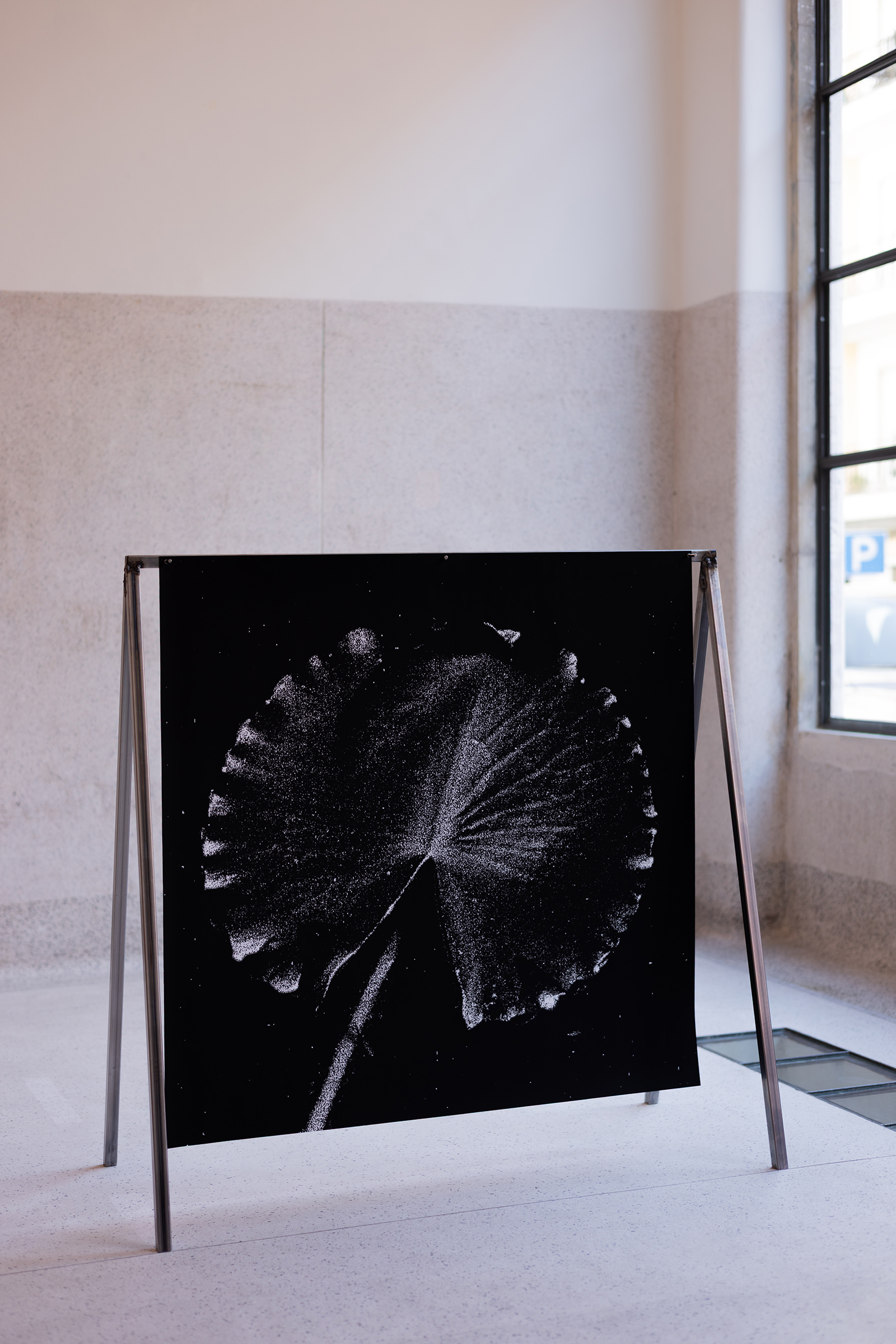
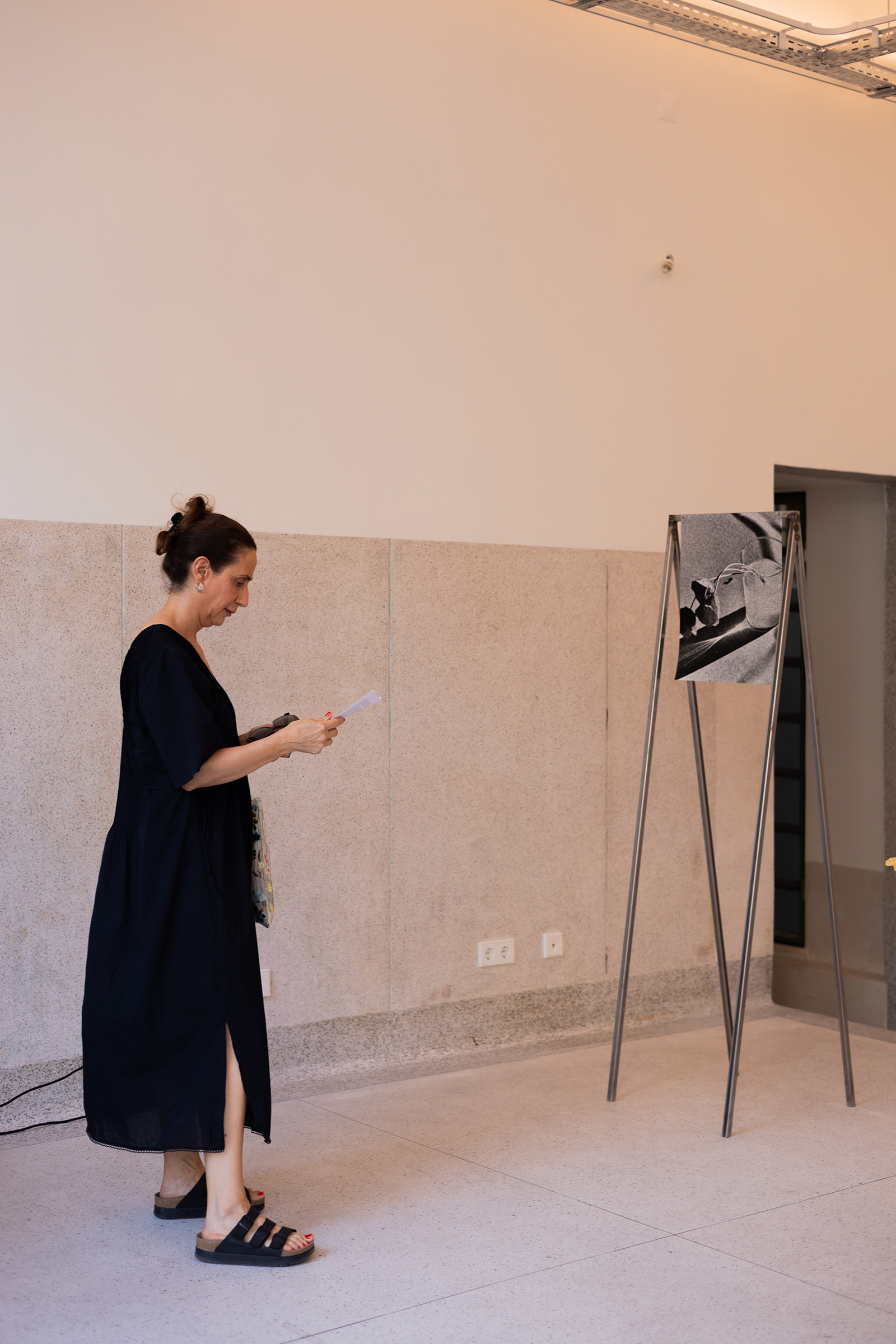
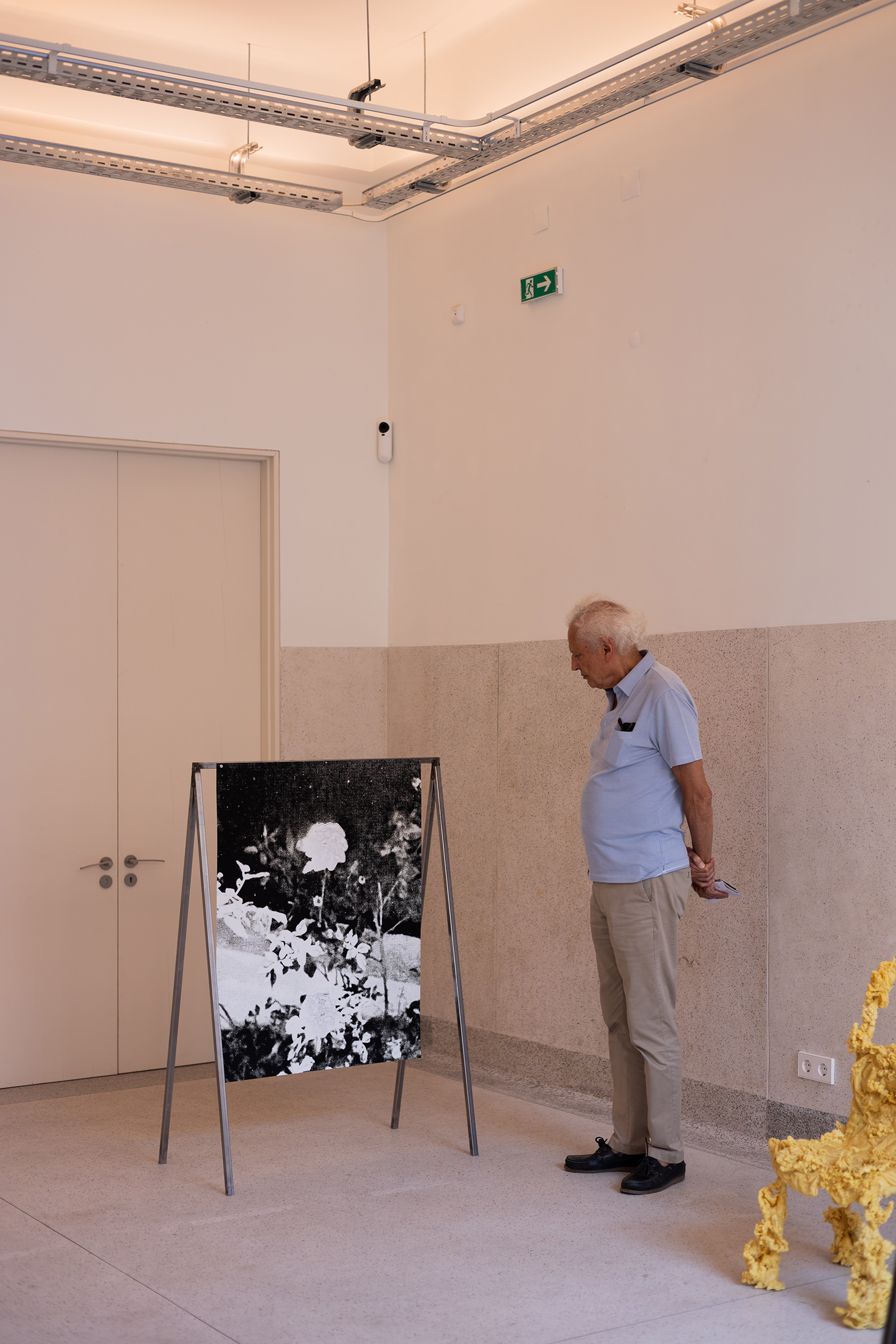
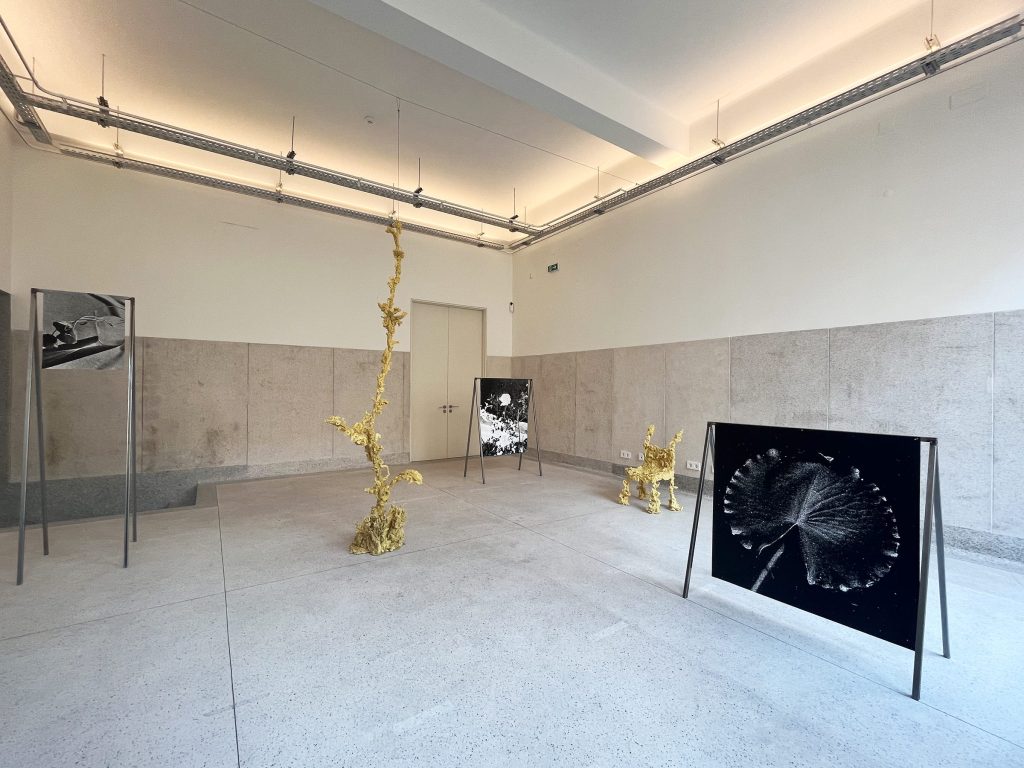
Vítor Serrano has developed a photographic practice characterized by a close observation of intimacy as a place where identity is formed. In his early works, portraiture and self-portraiture emerge as devices for engaging with the body and exploring how it inhabits everyday experience. In this exhibition, the artist presents flowers in different states of fragility and transition, capturing the moment when the plant simultaneously expresses vitality and decay. These photographs are displayed on metal structures designed specifically for the project. The metal functions both as a support and as a spatial device, bringing the photographic object closer to the realm of sculpture.
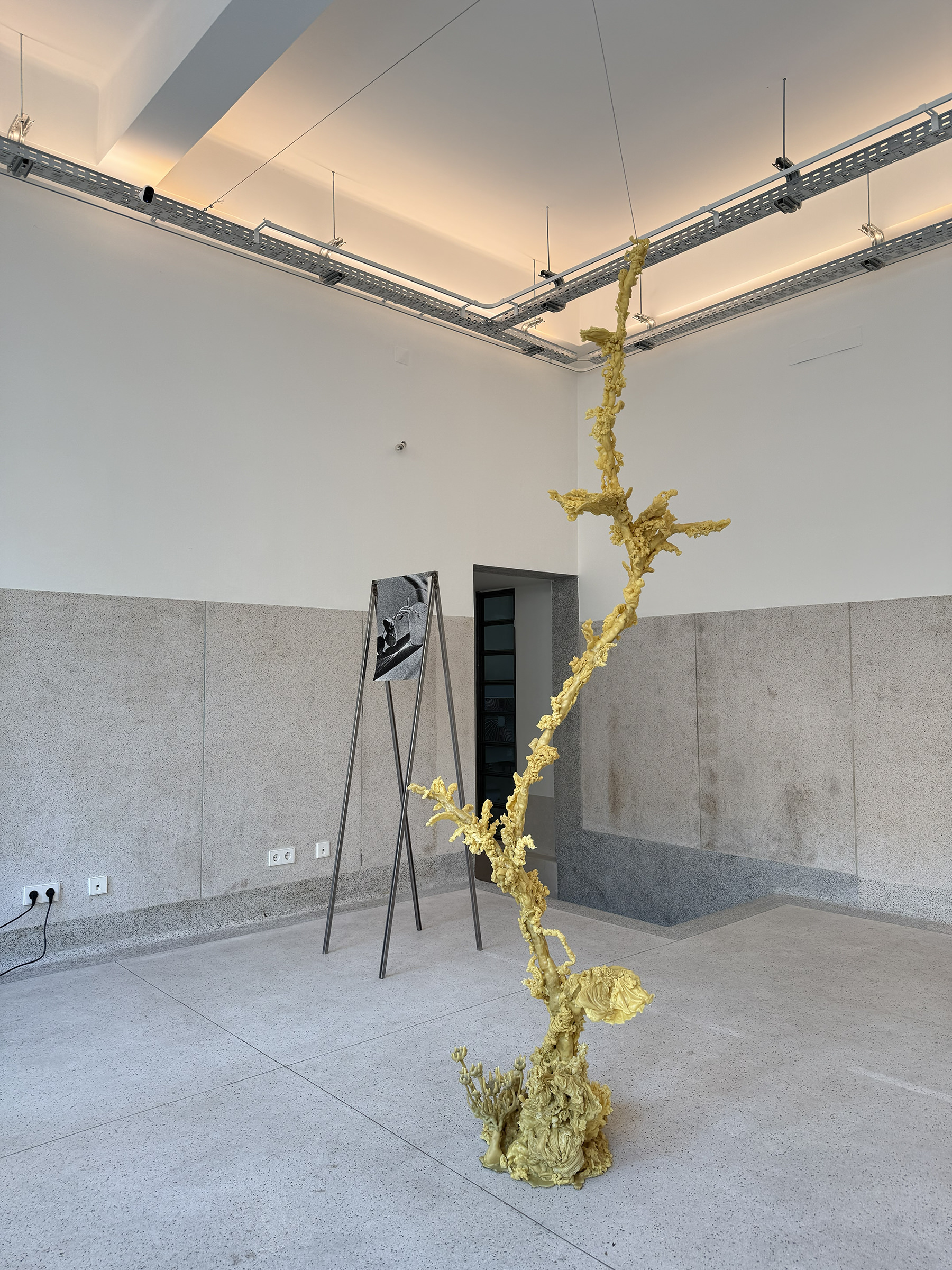
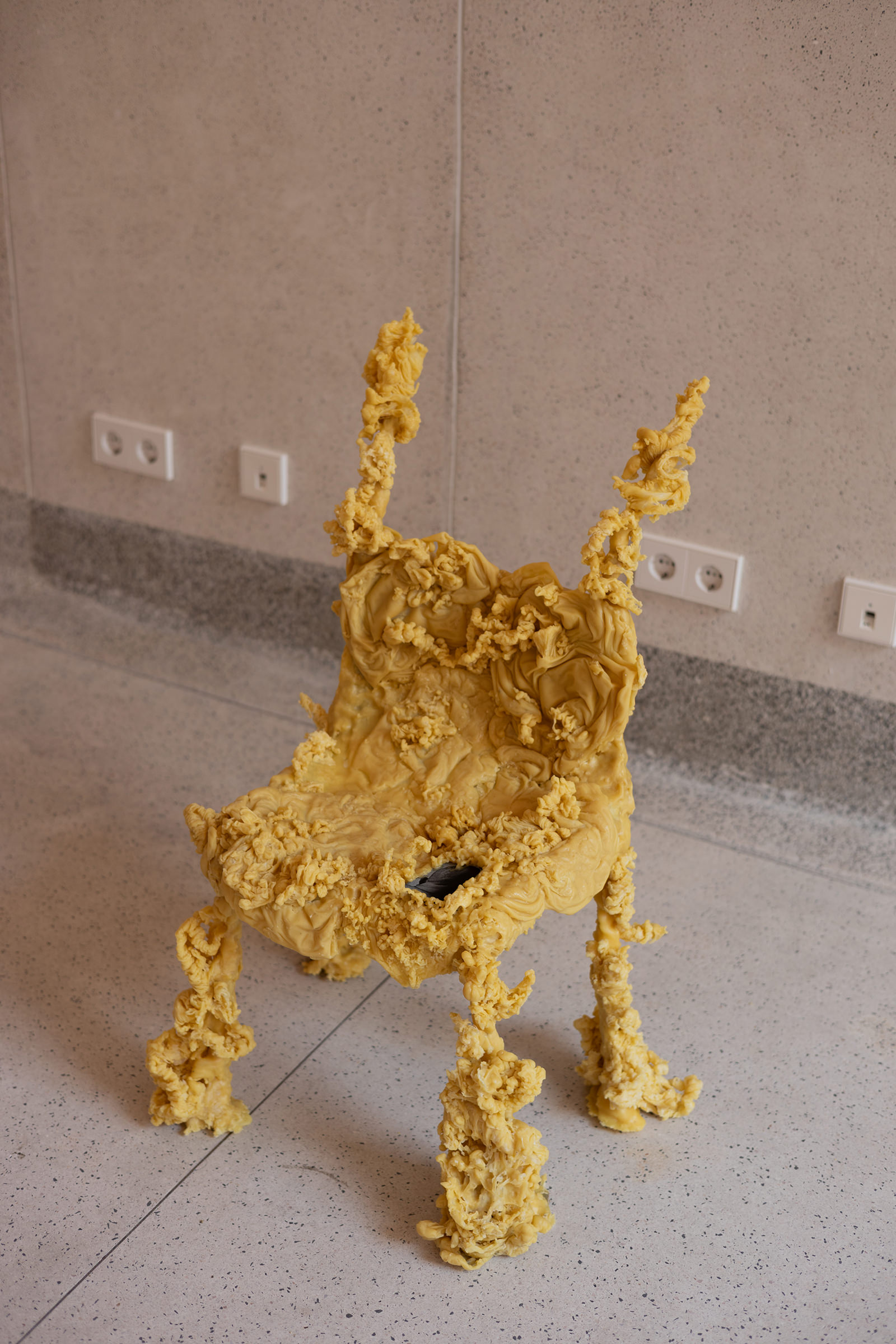
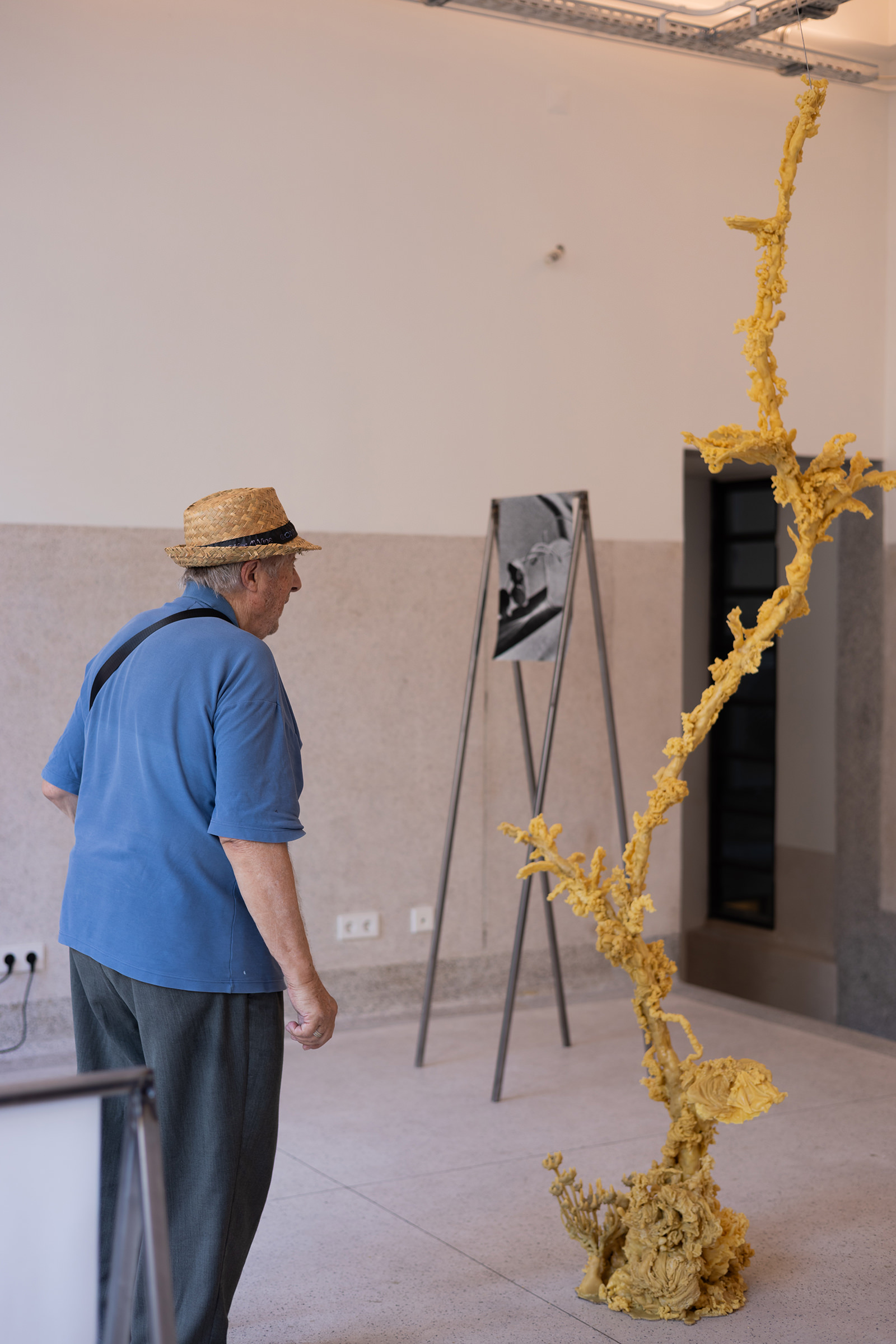
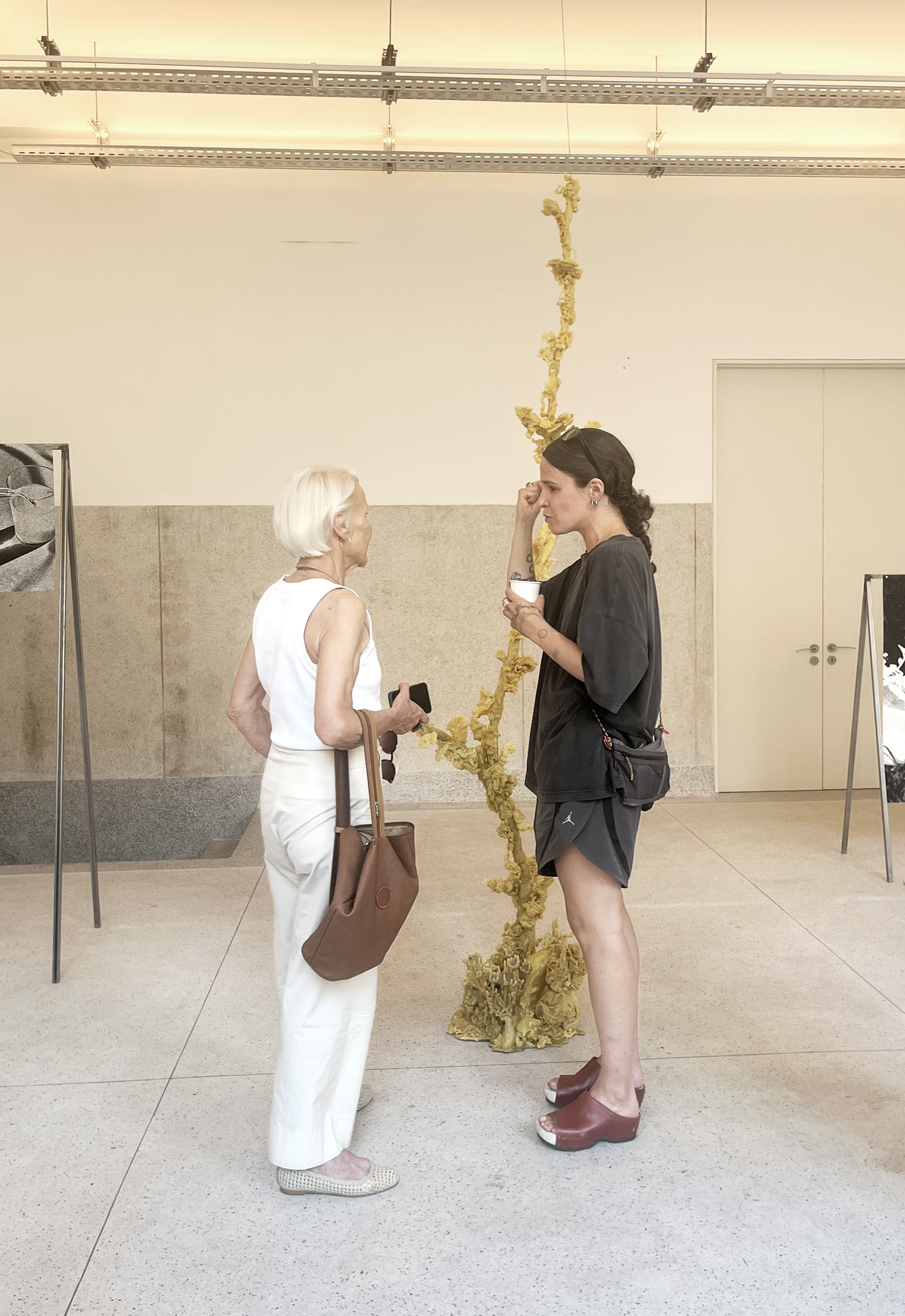
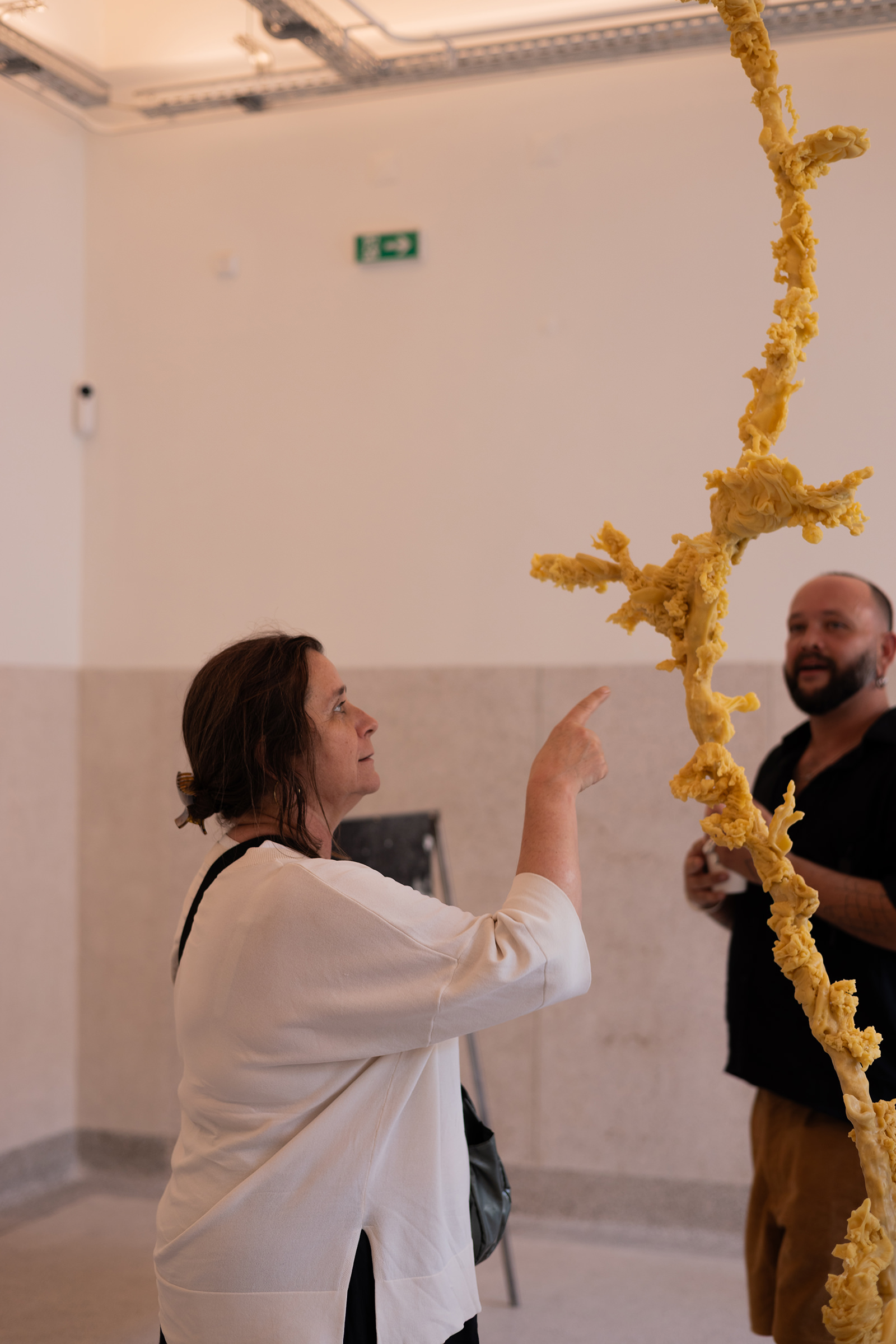
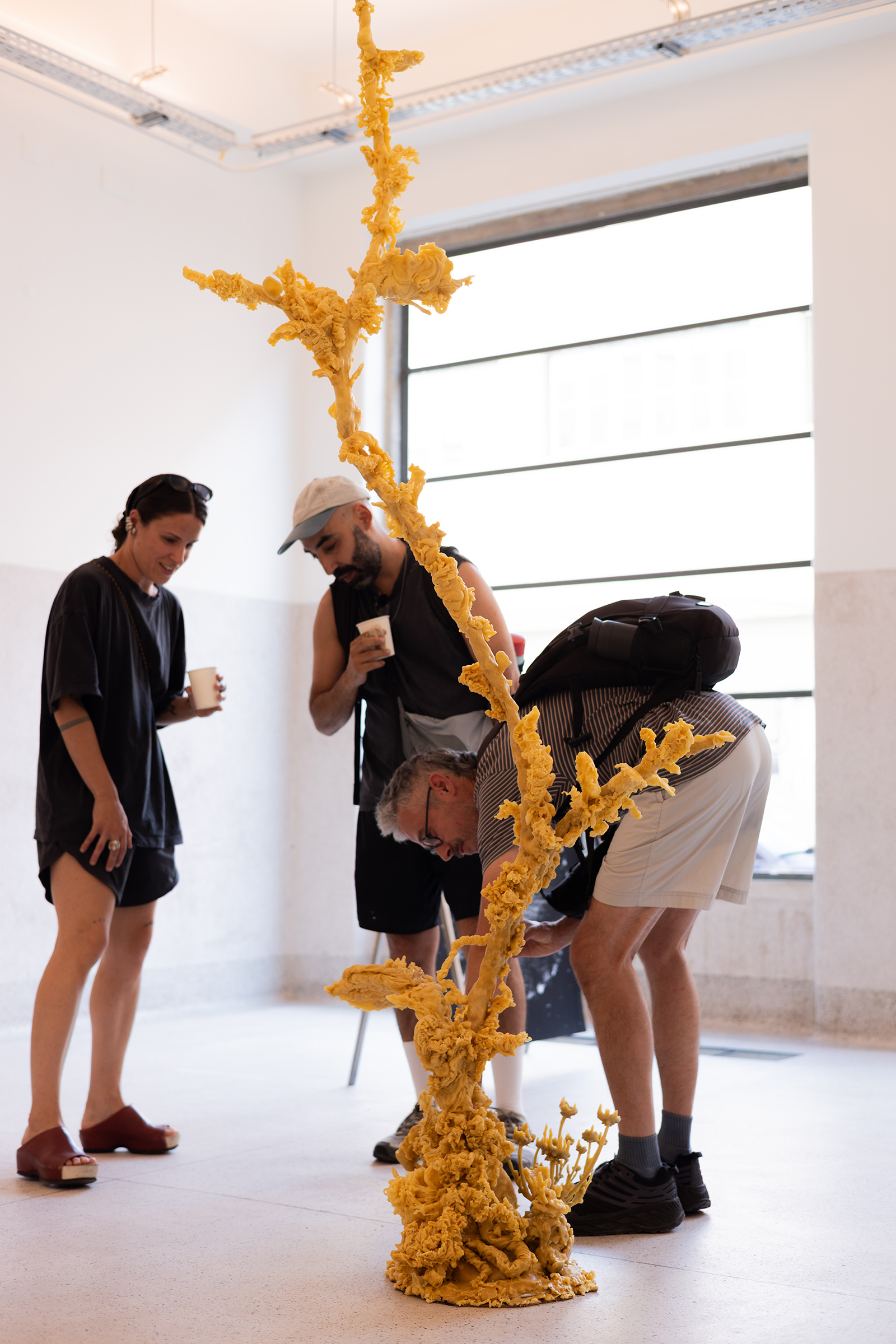
Helena Vieira’s background in jewellery design is deeply intertwined with her approach to sculpture through her MUTTER project, developed in London. Here, the beeswax sculptures appear as anatomical fragments and plant organisms in a constant mutation. The material emerge from thousands of invisible interactions, carrying the memory of the encounter between attraction, touch and transformation. It responds to its surroundings, to heat and to pressure, recording these variations as part of its own composition. Developed within the Space Zero venue itself, the sculptures take the exhibition space as a site of construction. The central work, standing over two metres tall, highlights the relationship between scale, volume and architecture.
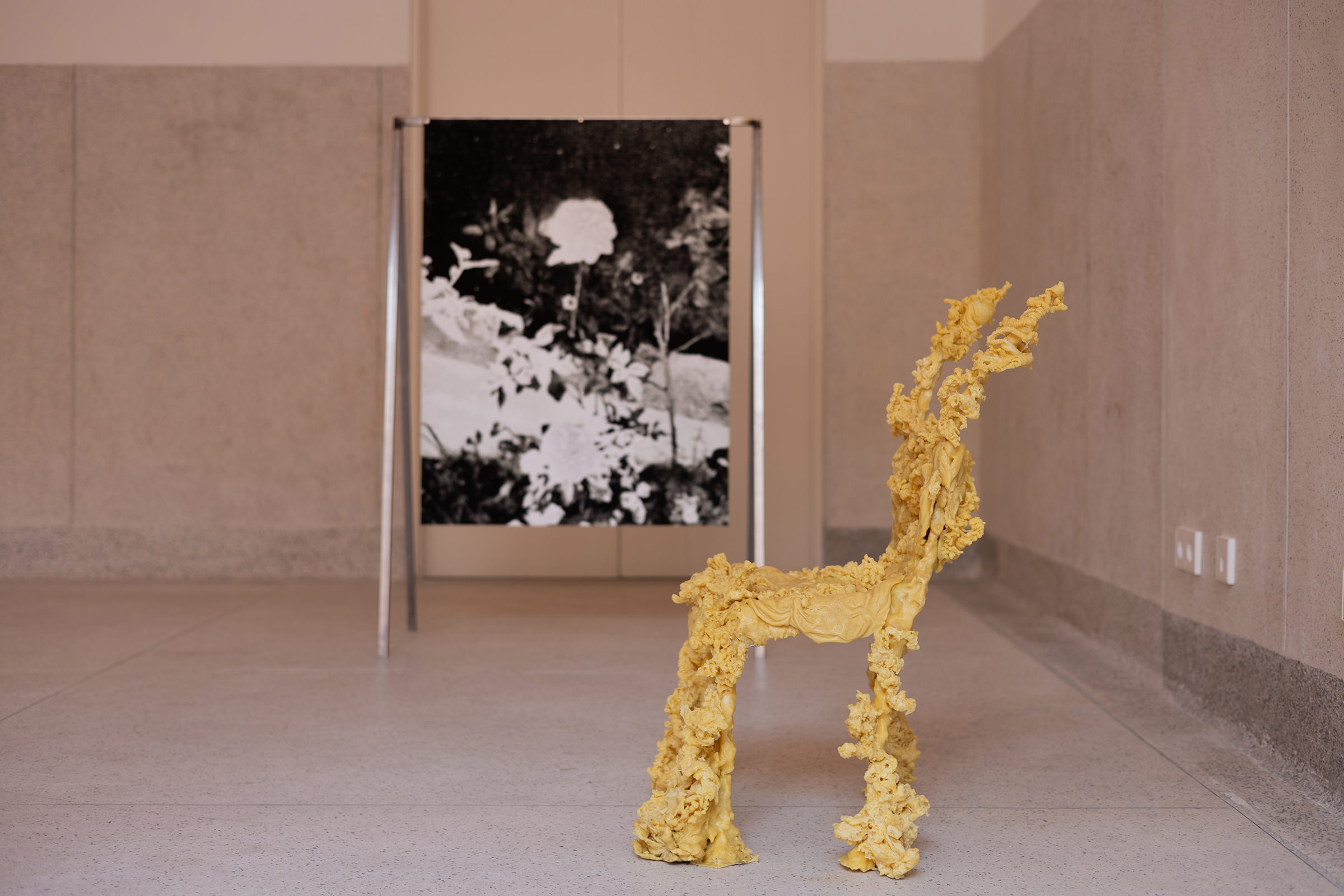
This dialogue reaches its point of direct contamination the moment Helena Vieira intervenes directly on one of Vítor Serrano’s photographs, covering its surface with a layer of beeswax and interfering with its visual interpretation and behaviour. The image acquires a new skin and its initial transparency gives way to a variable opacity. This work rests on a sculpture that evokes a chair, giving the photograph a volumetric presence in relation to the space. Rather than simply bringing together two artistic languages, the exhibition reveals two
practices that converge around the same reflection on the body. Helena Vieira’s practice, rooted in jewellery, brings sculpture closer to the body’s physicality through the act of modelling. In Vítor Serrano’s photographic practice, the body extends into the vegetal world, recognising a shared anatomy in flowers. In the encounter between these two artists, a common sensitivity towards the body, form and desire emerges.
Vergado Desejo also reveals a biological aspect that quietly accompanies the exhibition: most plant species are hermaphroditic. Within a single organism coexist the elements
necessary for reproduction, even though fertilisation still depends on an encounter with another. The flower reveals itself, producing fragrance, colour and nectar. It attracts insects,
welcomes the wind and exposes its reproductive organs to the outside world. Its survival depends on this openness, and desire appears here as a condition of life itself, preceding
both culture and language. To grow is to be transformed, to bloom is to expose oneself, and to rise is, inevitably, to confront gravity. The very forces that drive expansion also
accompany the path towards decline.
It is within this interval that Vergado Desejo proposes a reflection on what remains when the force of desire passes through bodies and matter. Perhaps this is why desire never finds rest. Its movement does not end with fulfilment, but continually renews itself.
We live leaning towards that which lies beyond us.
Dobra#2 Vergado Desejo
Vítor Serrano and Helena Vieira
Appleton x Zero