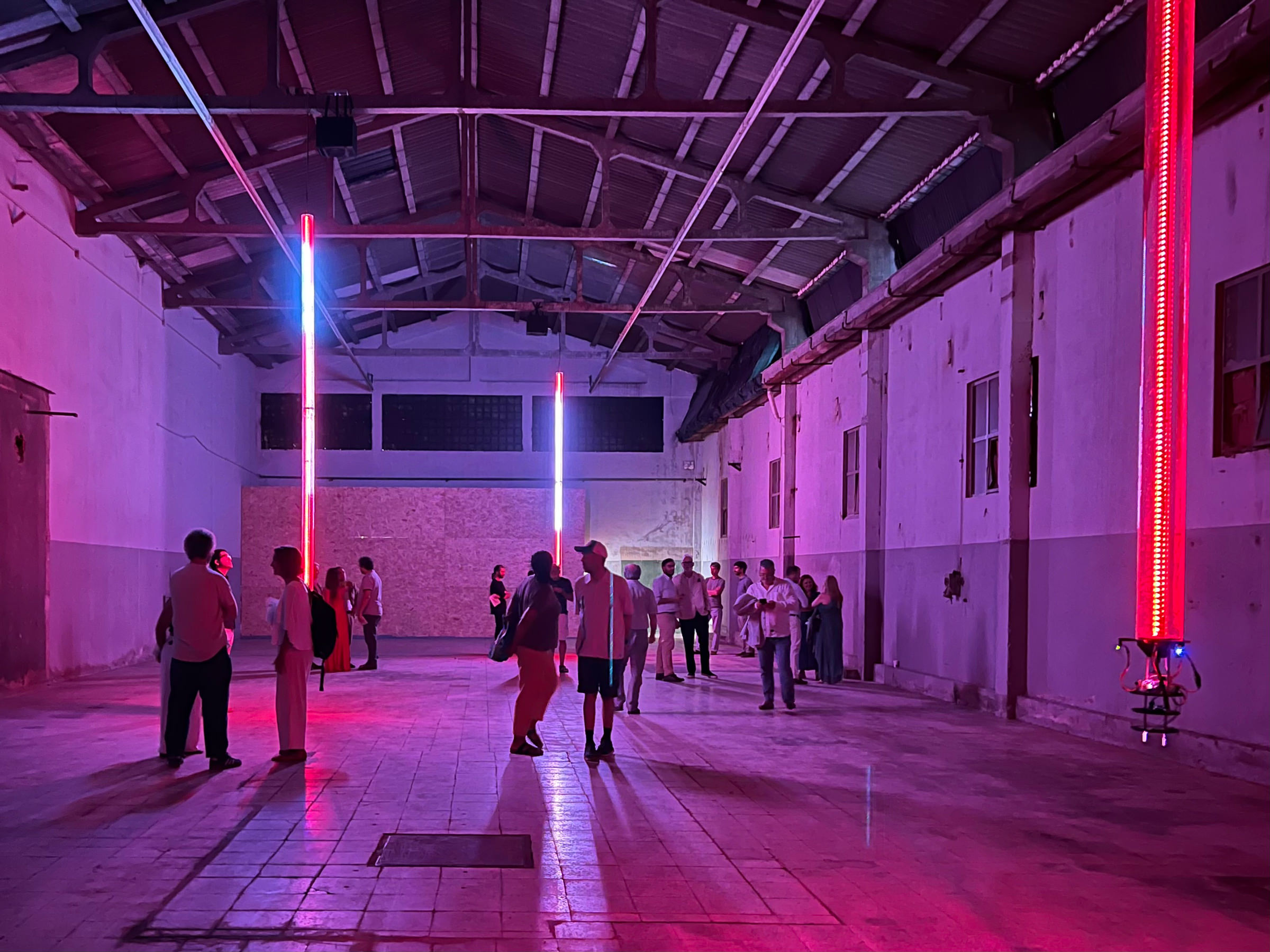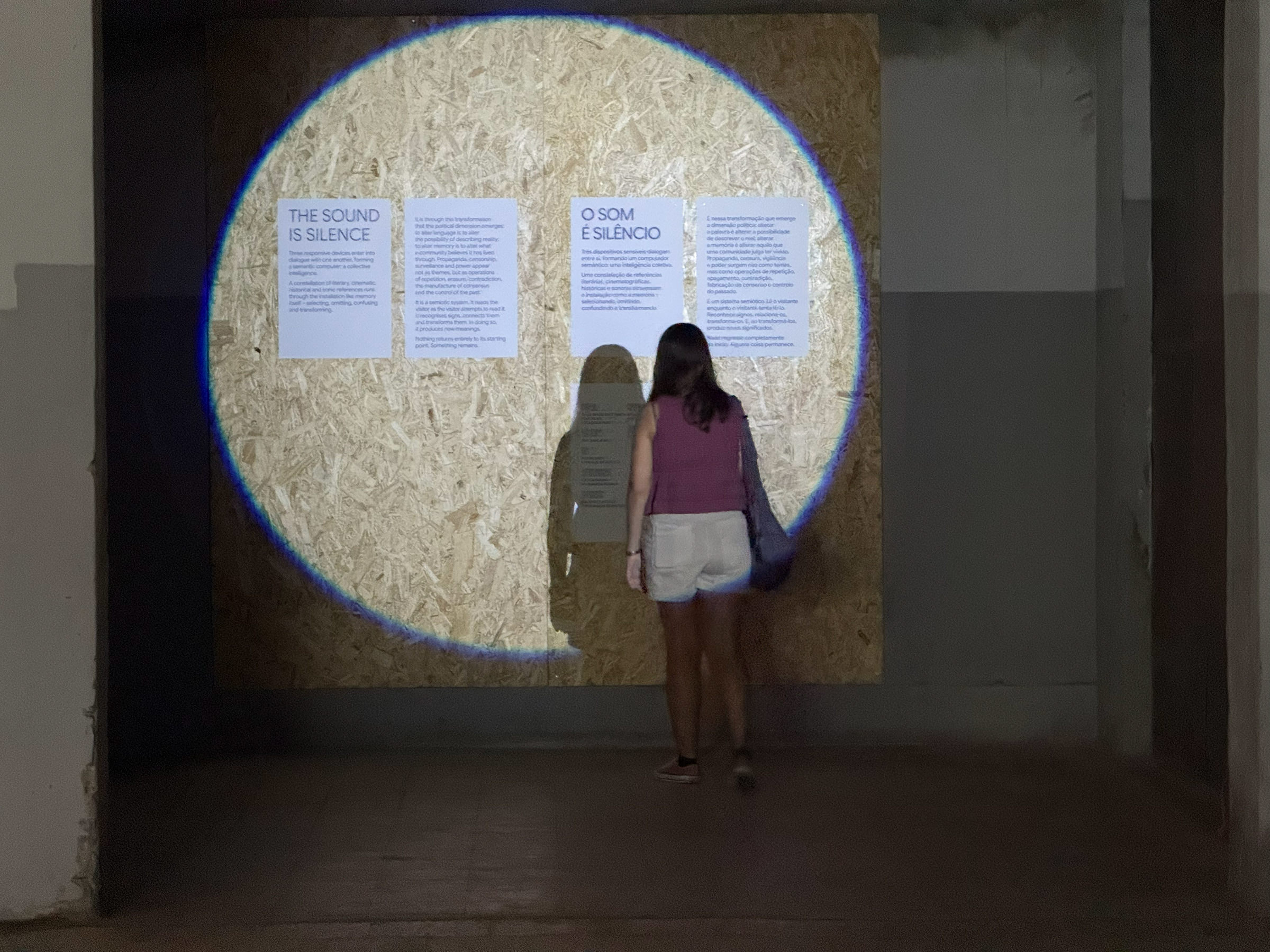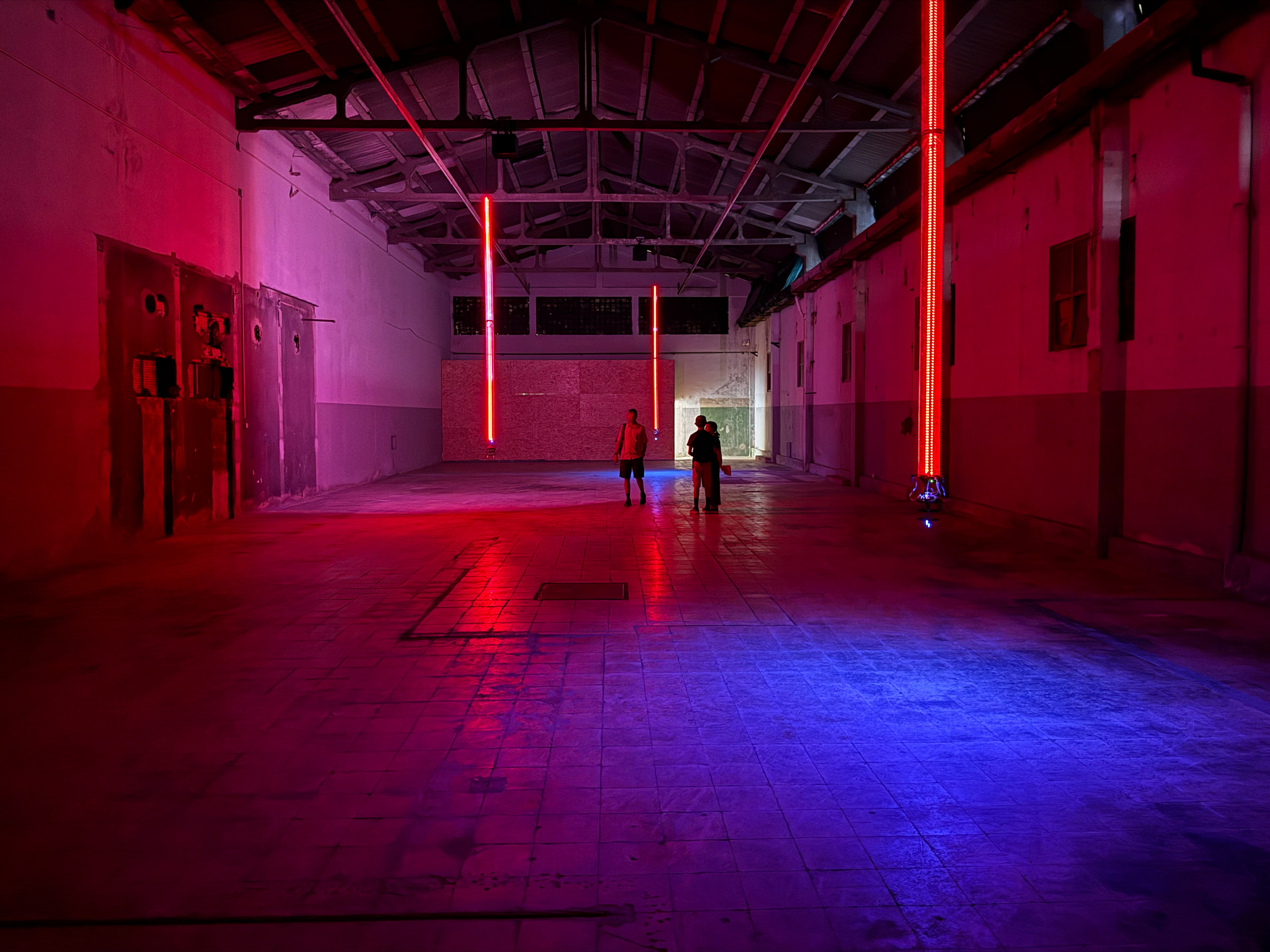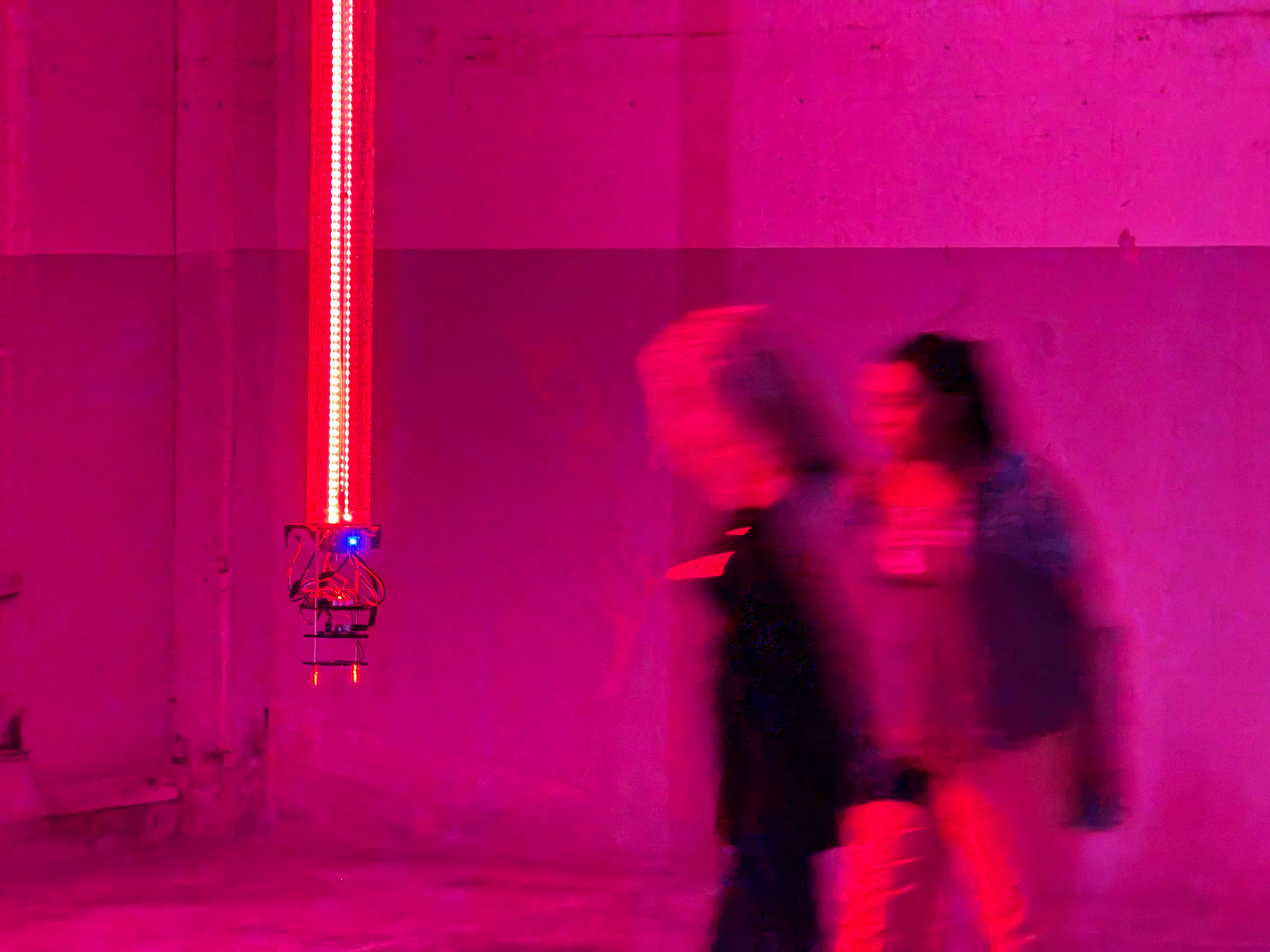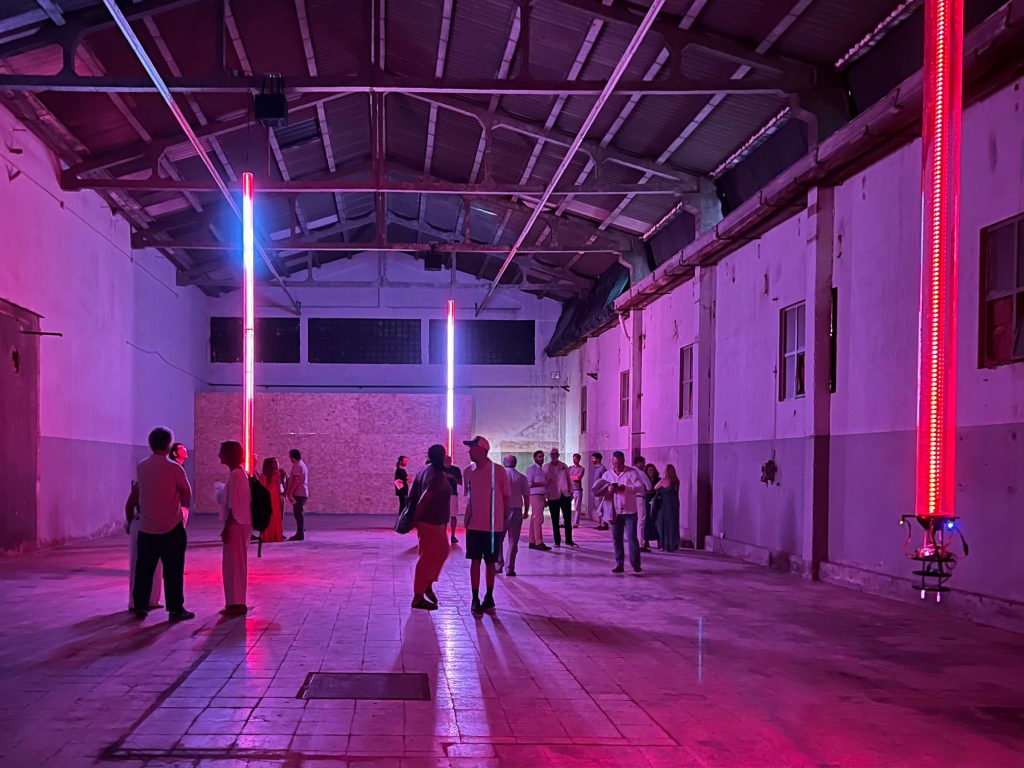
Three responsive devices enter into dialogue with one another, forming a semantic computer: a collective intelligence.
A constellation of literary, cinematic, historical and sonic references runs through the installation like memory itself – selecting, omitting, confusing and transforming.
It is through this transformation that the political dimension emerges: to alter language is to alter the possibility of describing reality; to alter memory is to alter what a community believes it has lived through. Propaganda, censorship, surveillance and power appear not as themes, but as operations of repetition, erasure, contradiction, the manufacture of consensus and the control of the past.
It is a semiotic system. It reads the visitor as the visitor attempts to read it. It recognises signs, connects them and transforms them. In doing so, it produces new meanings.
Nothing returns entirely to its starting point. Something remains.