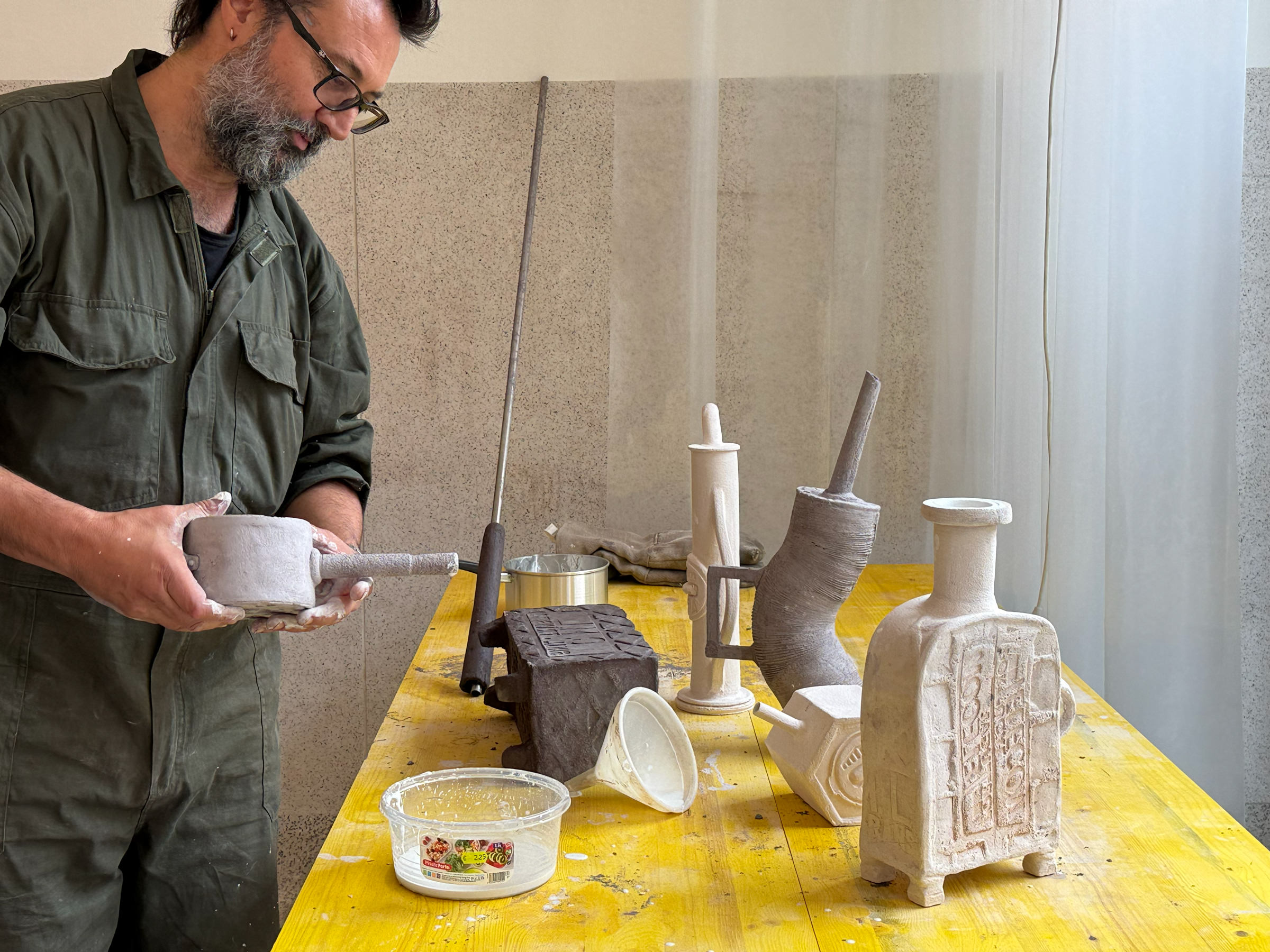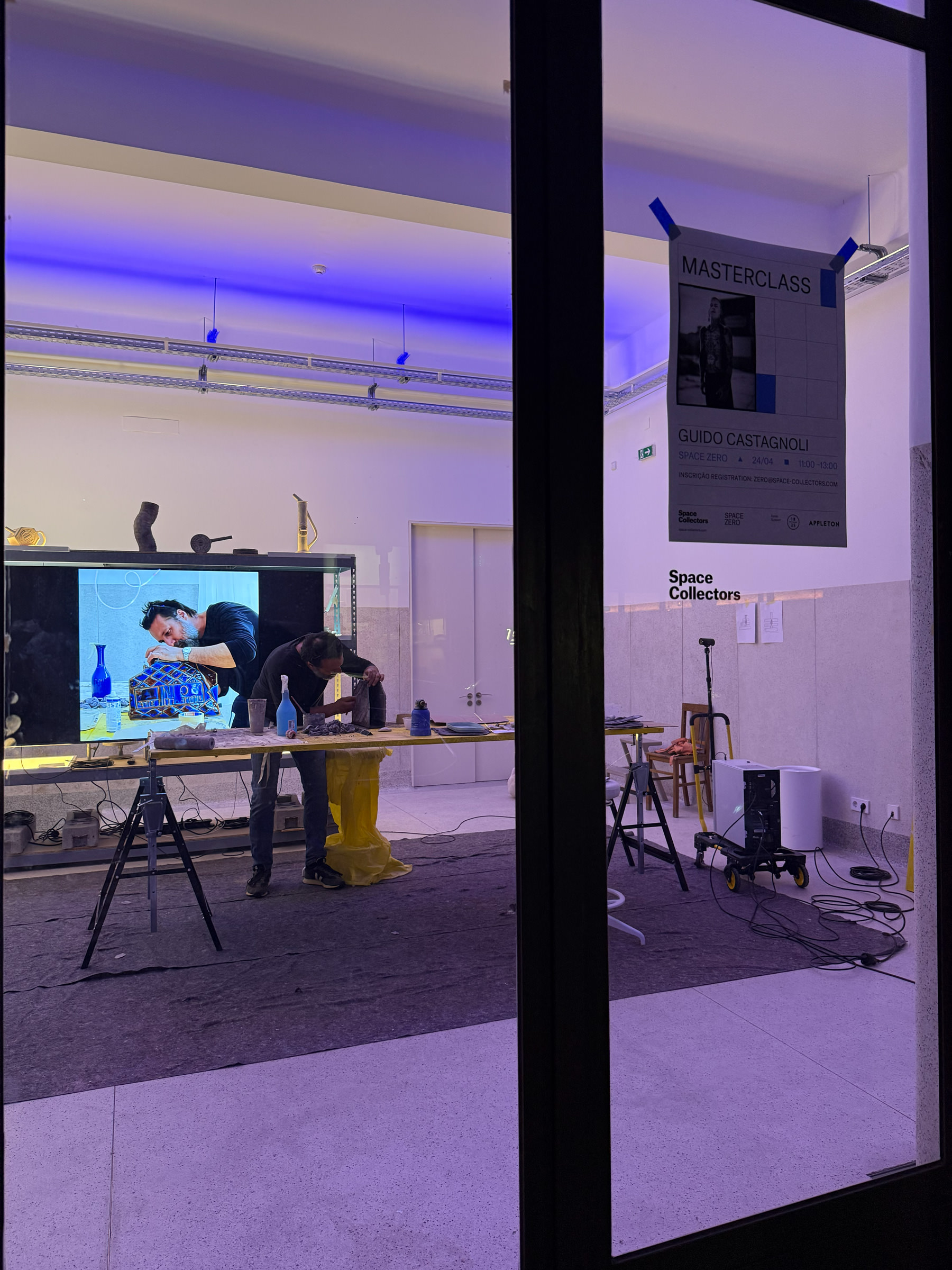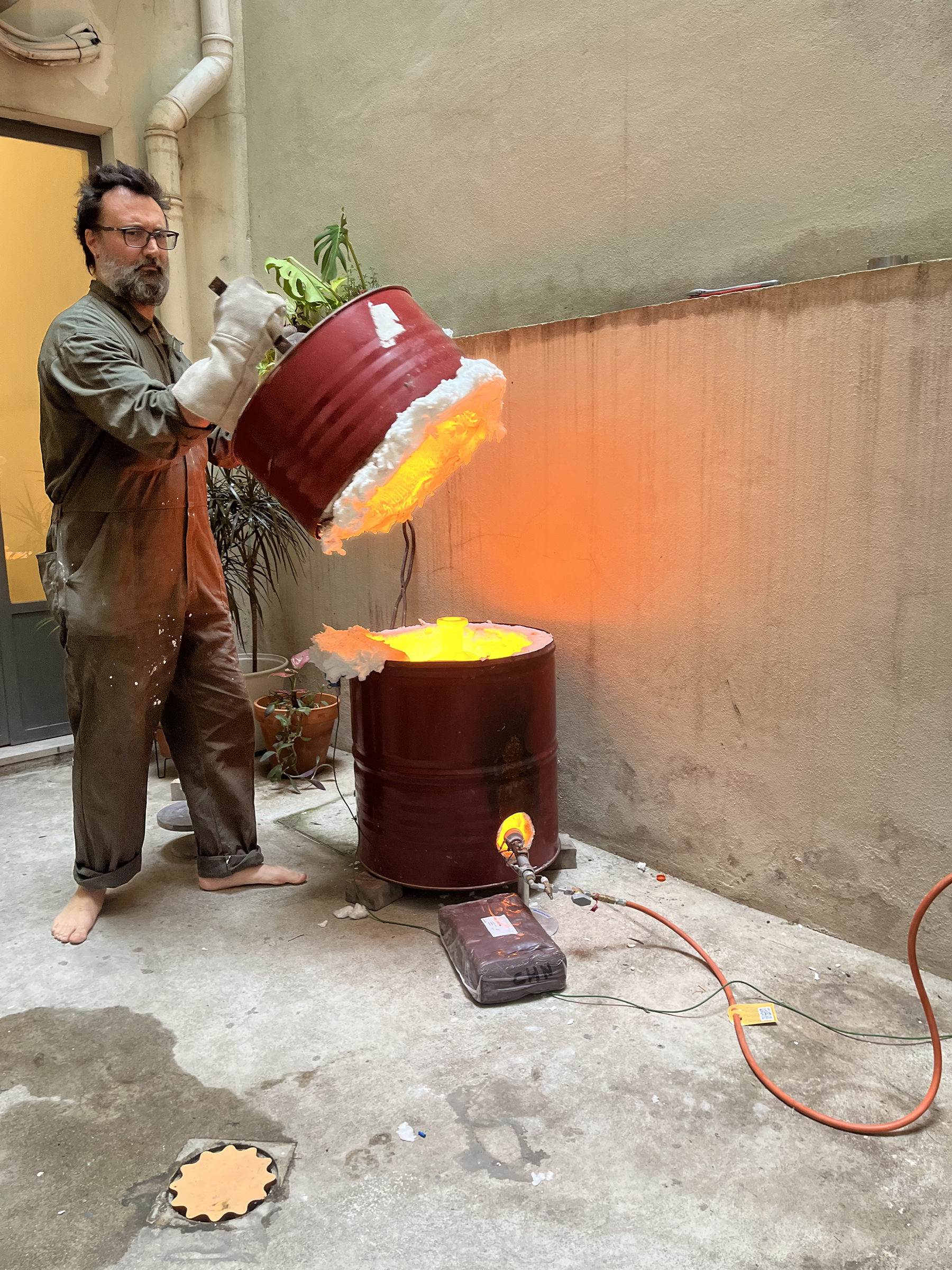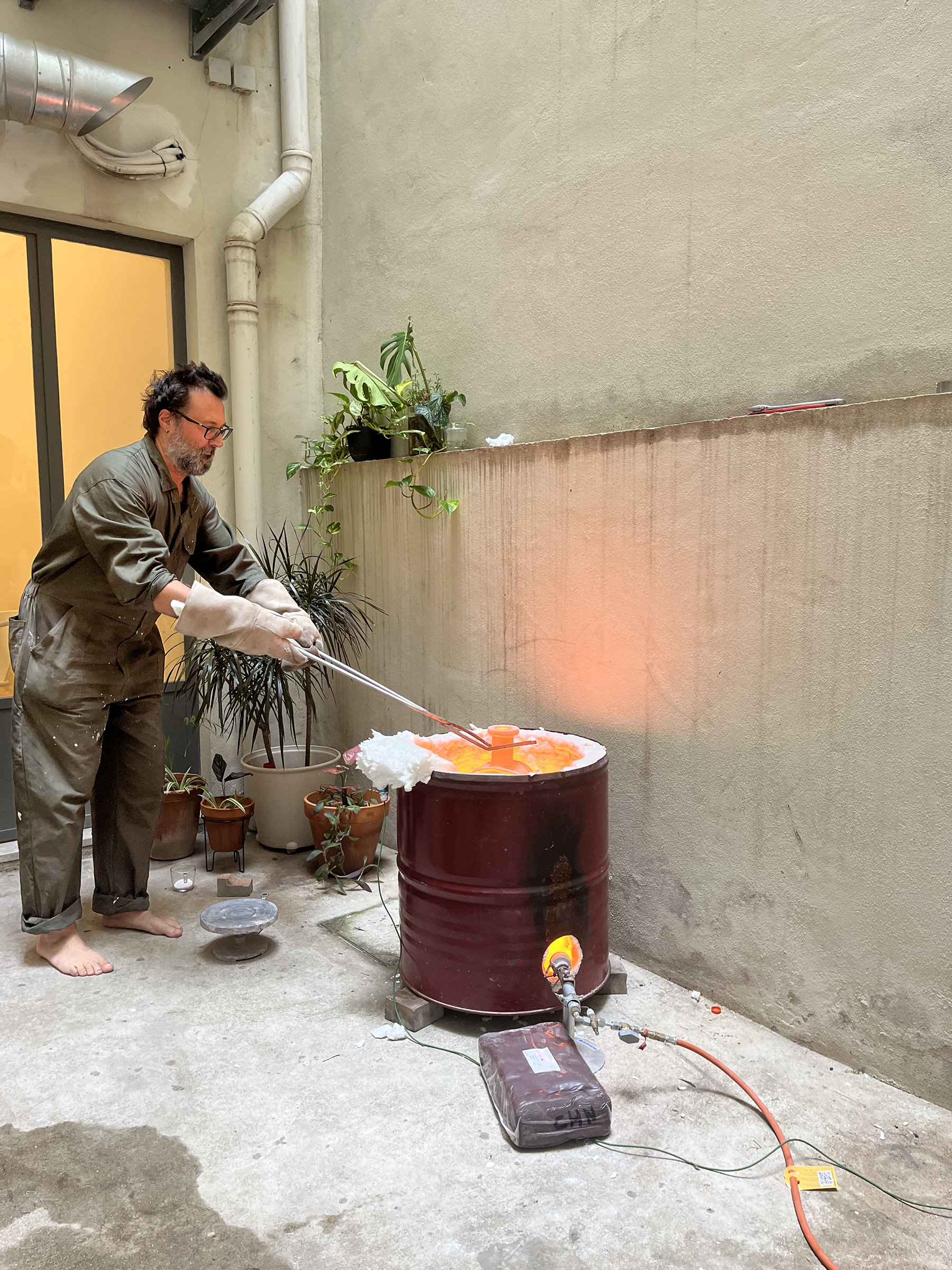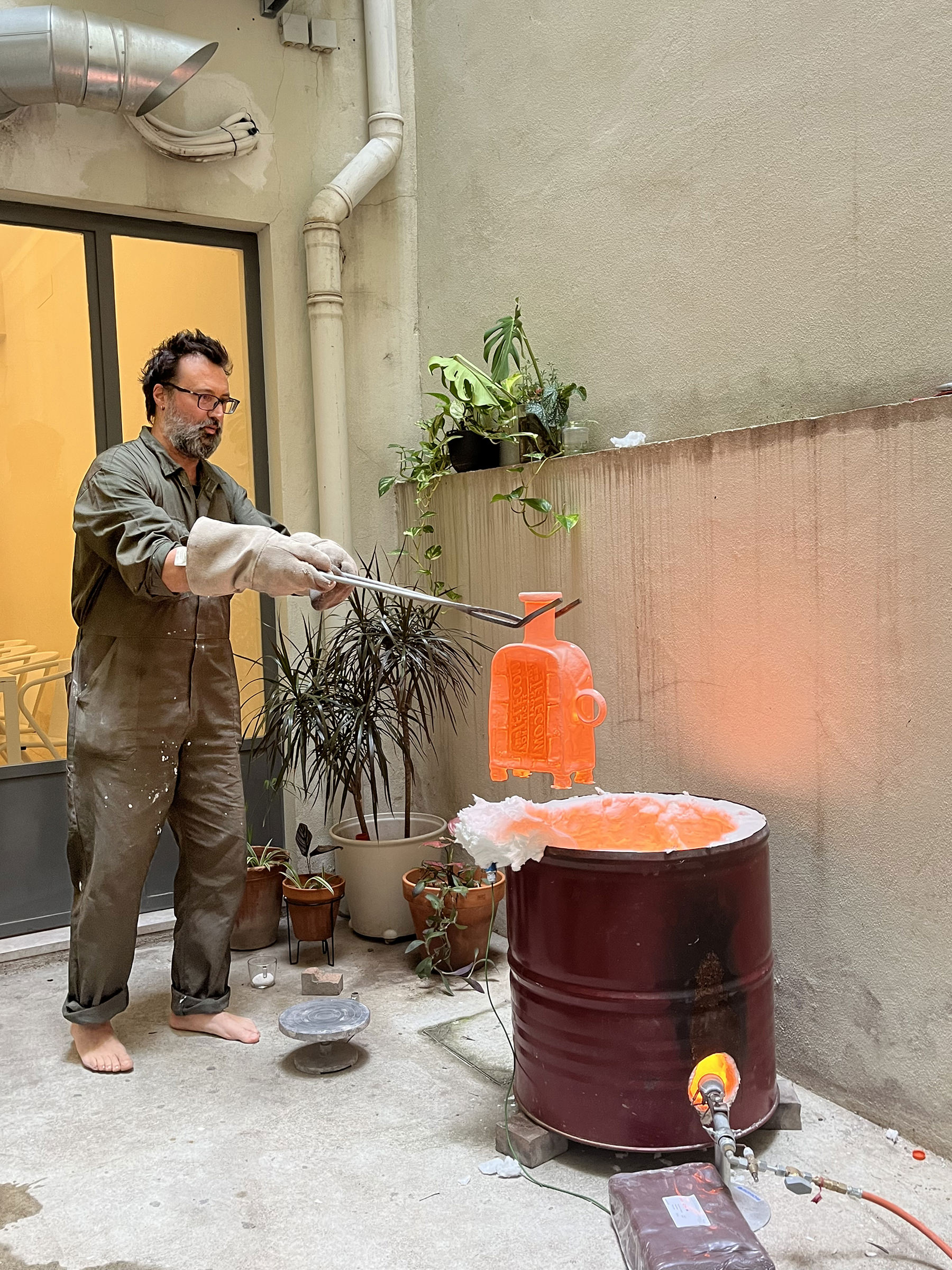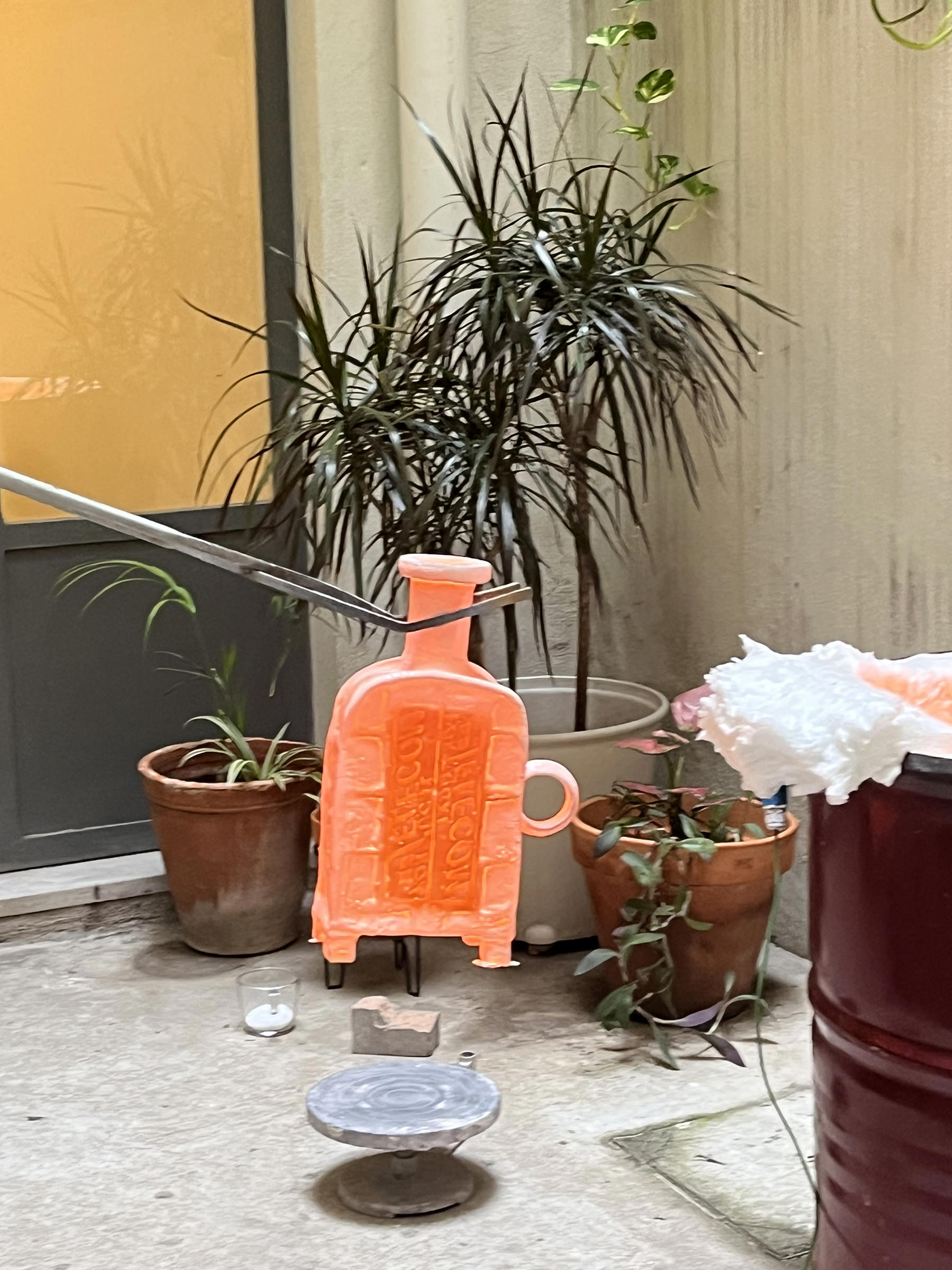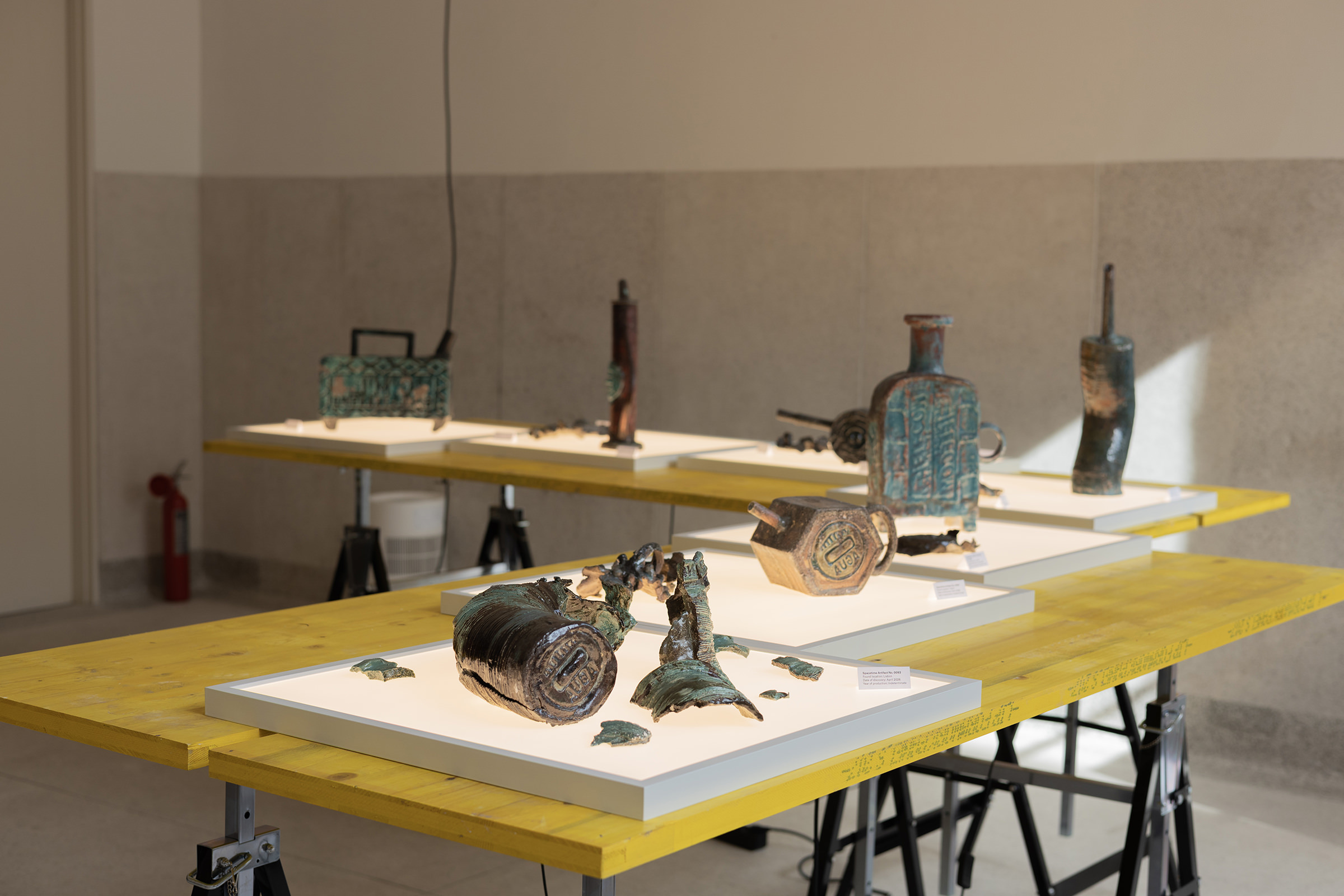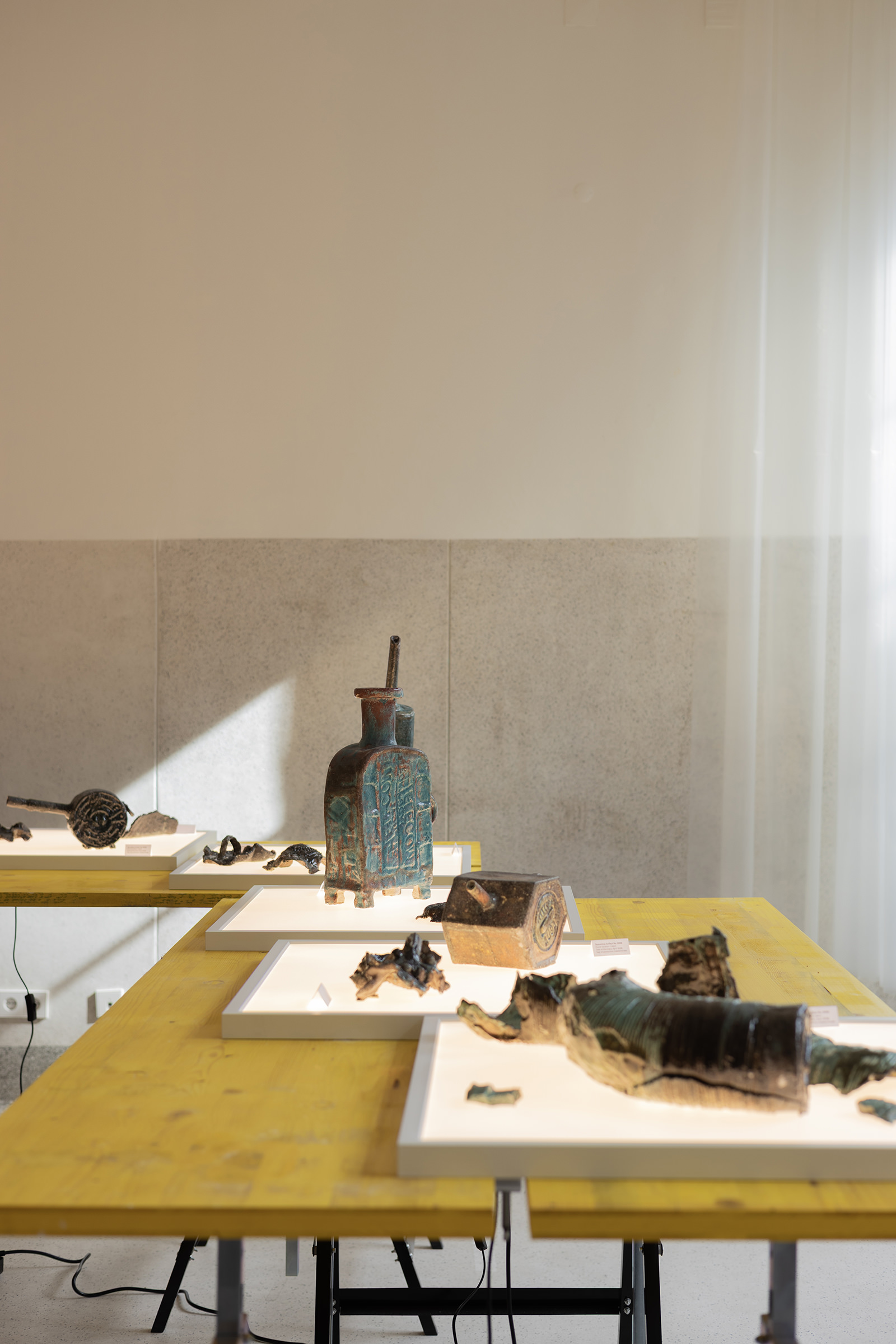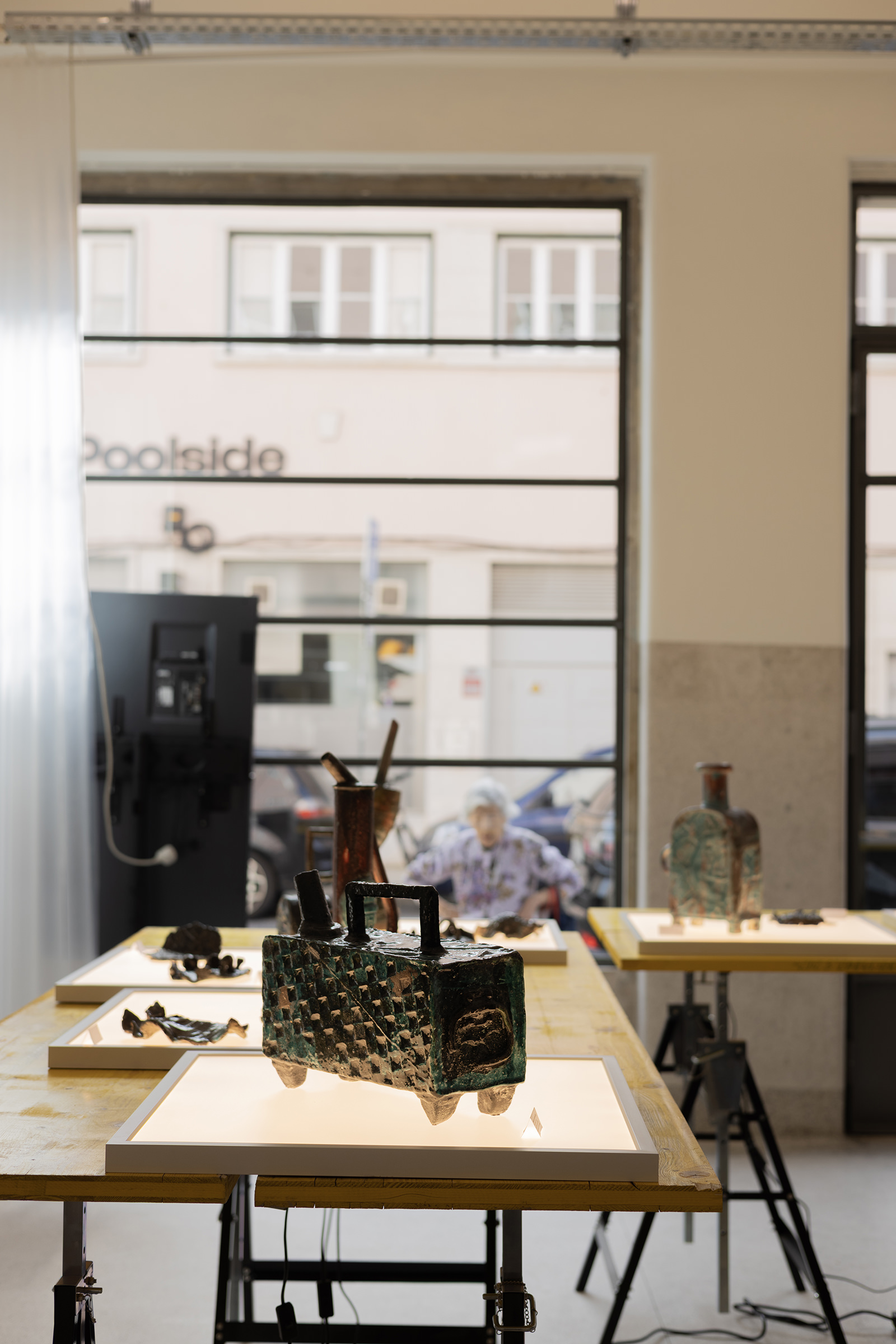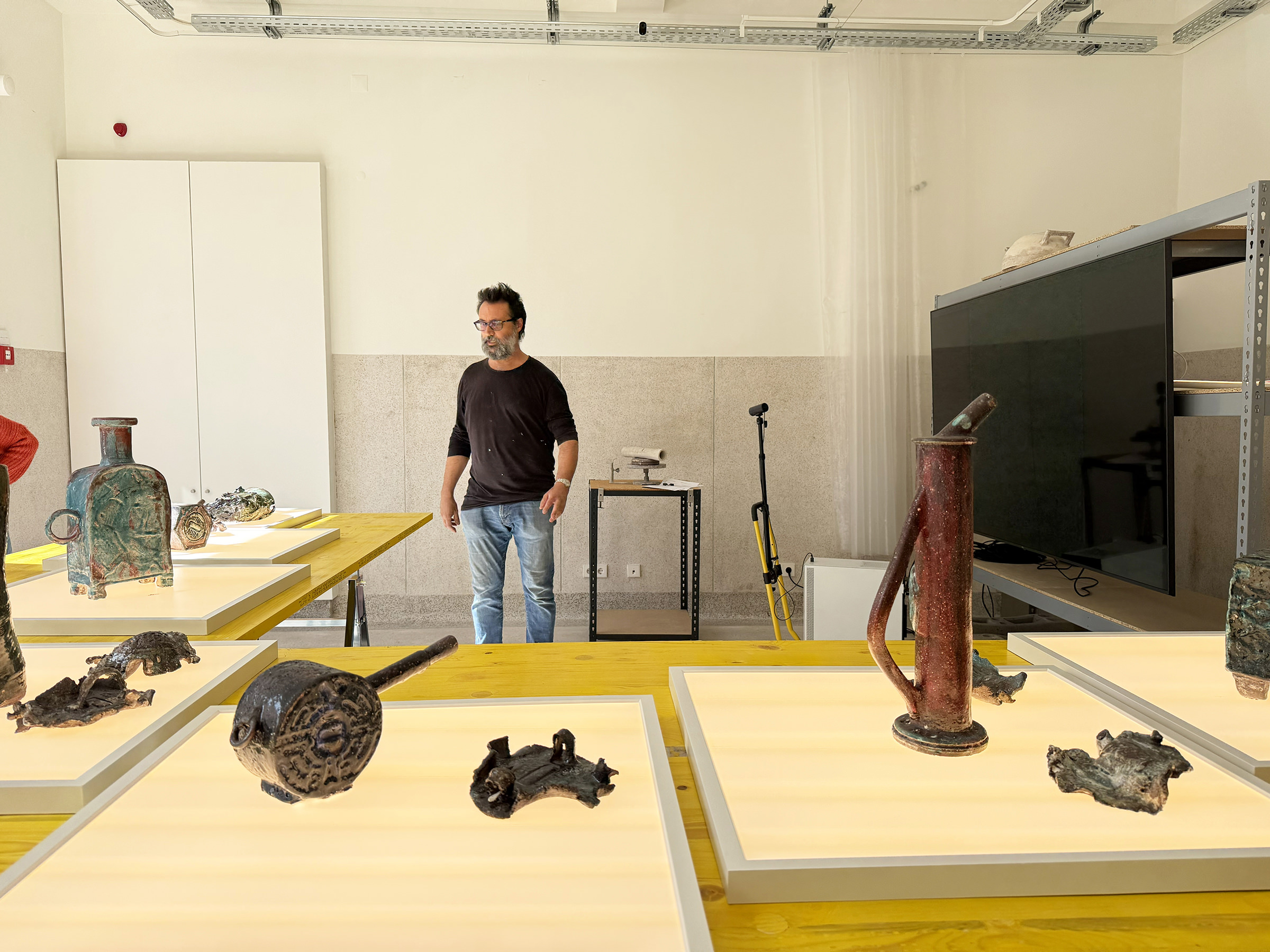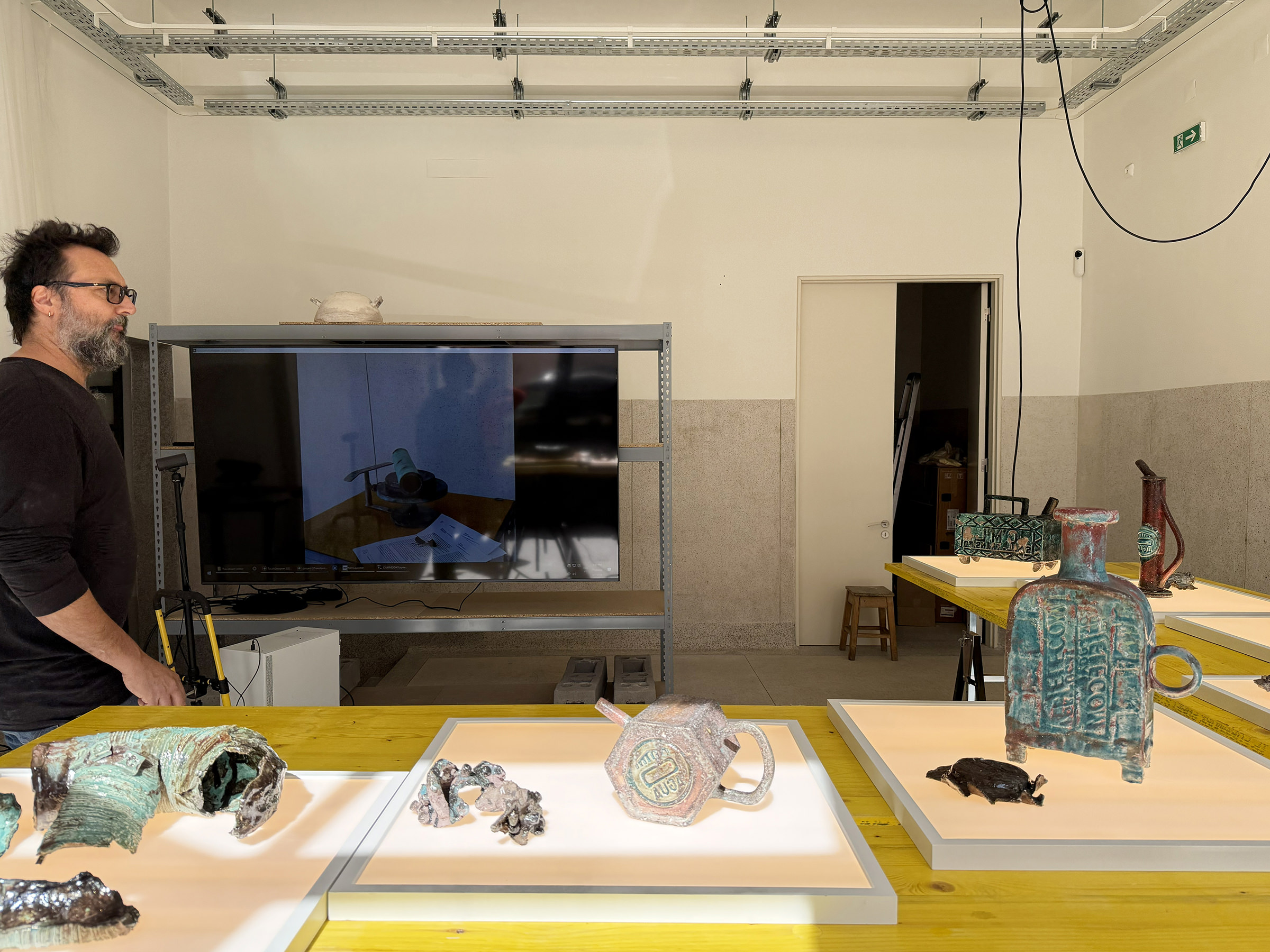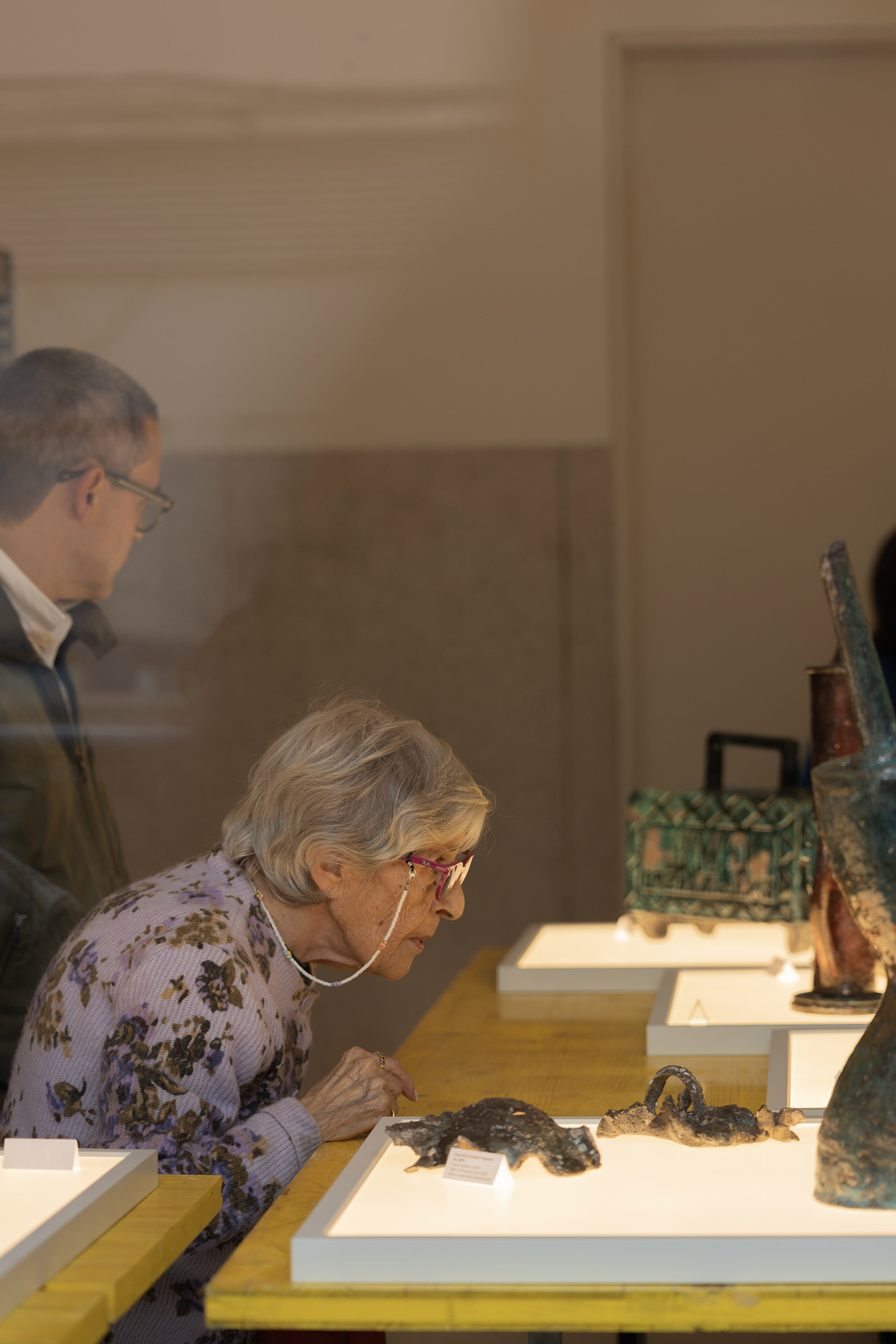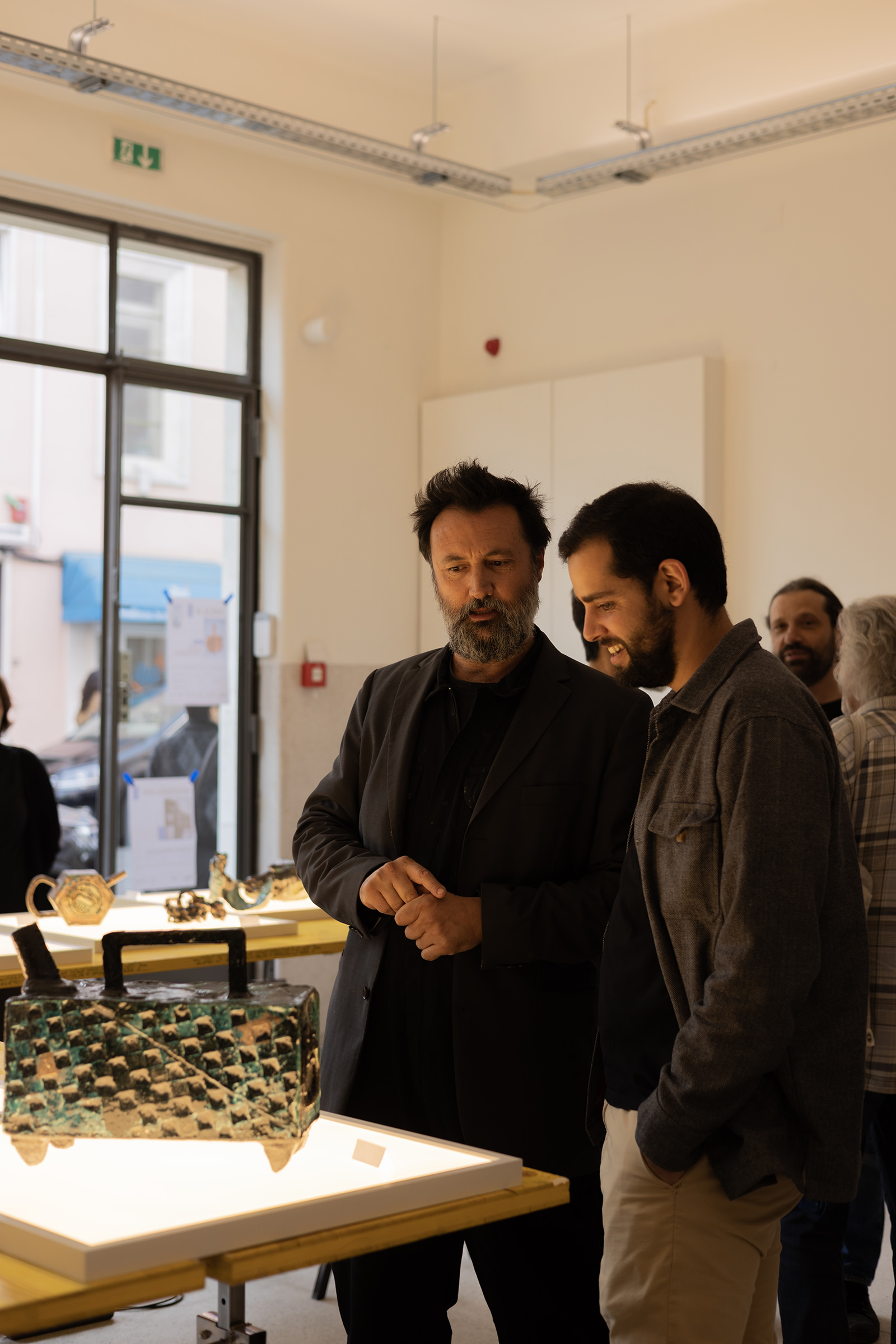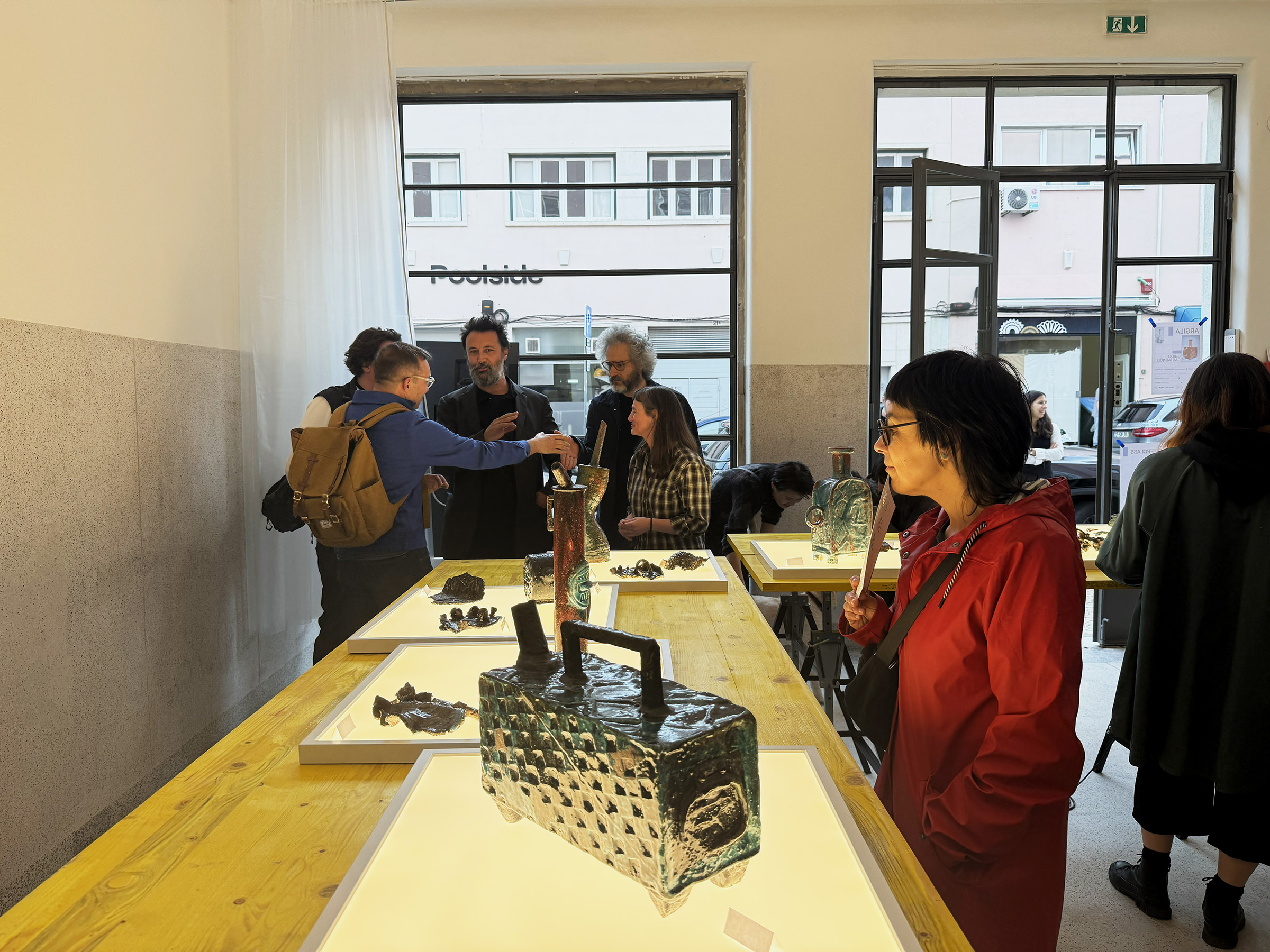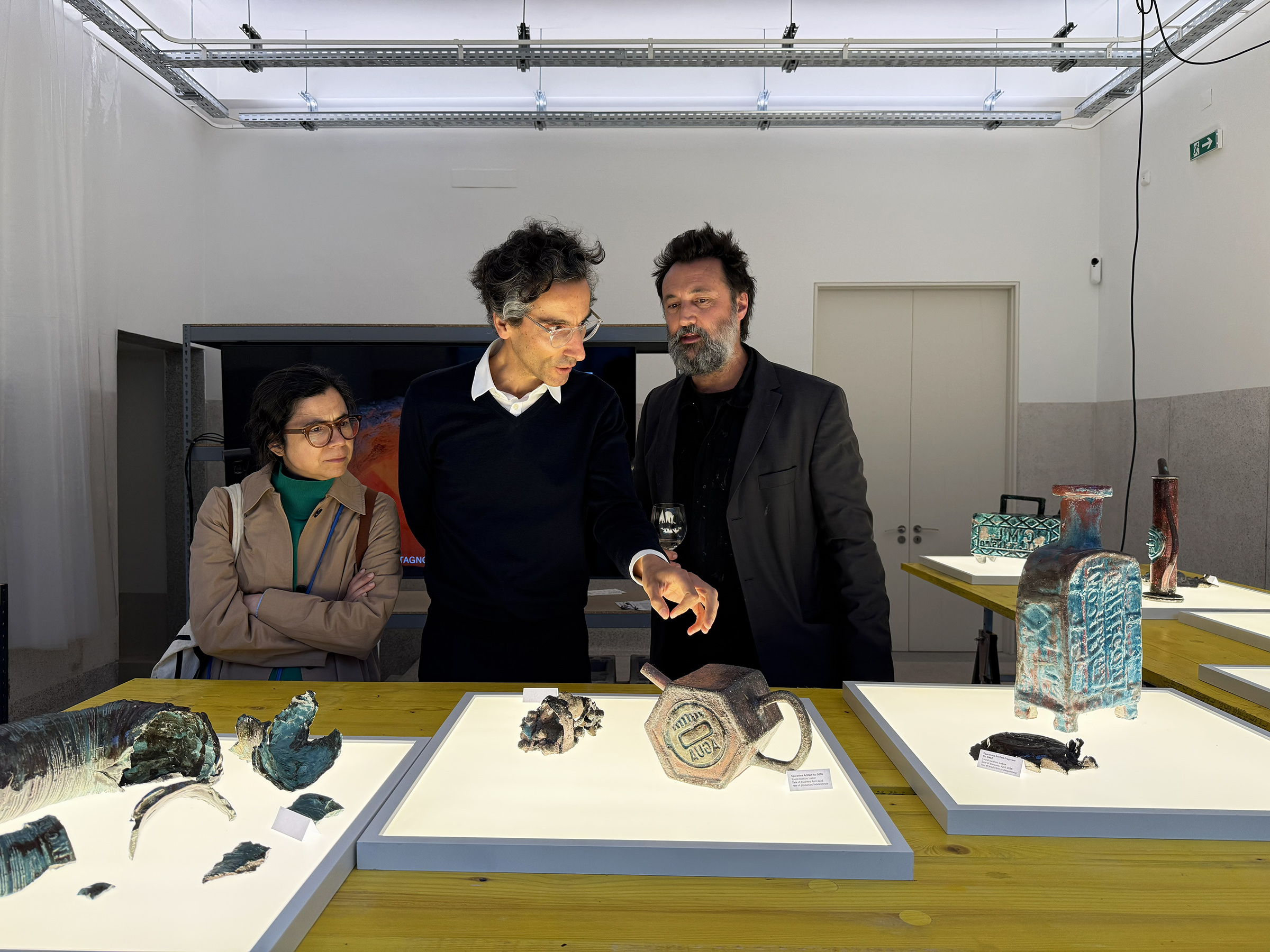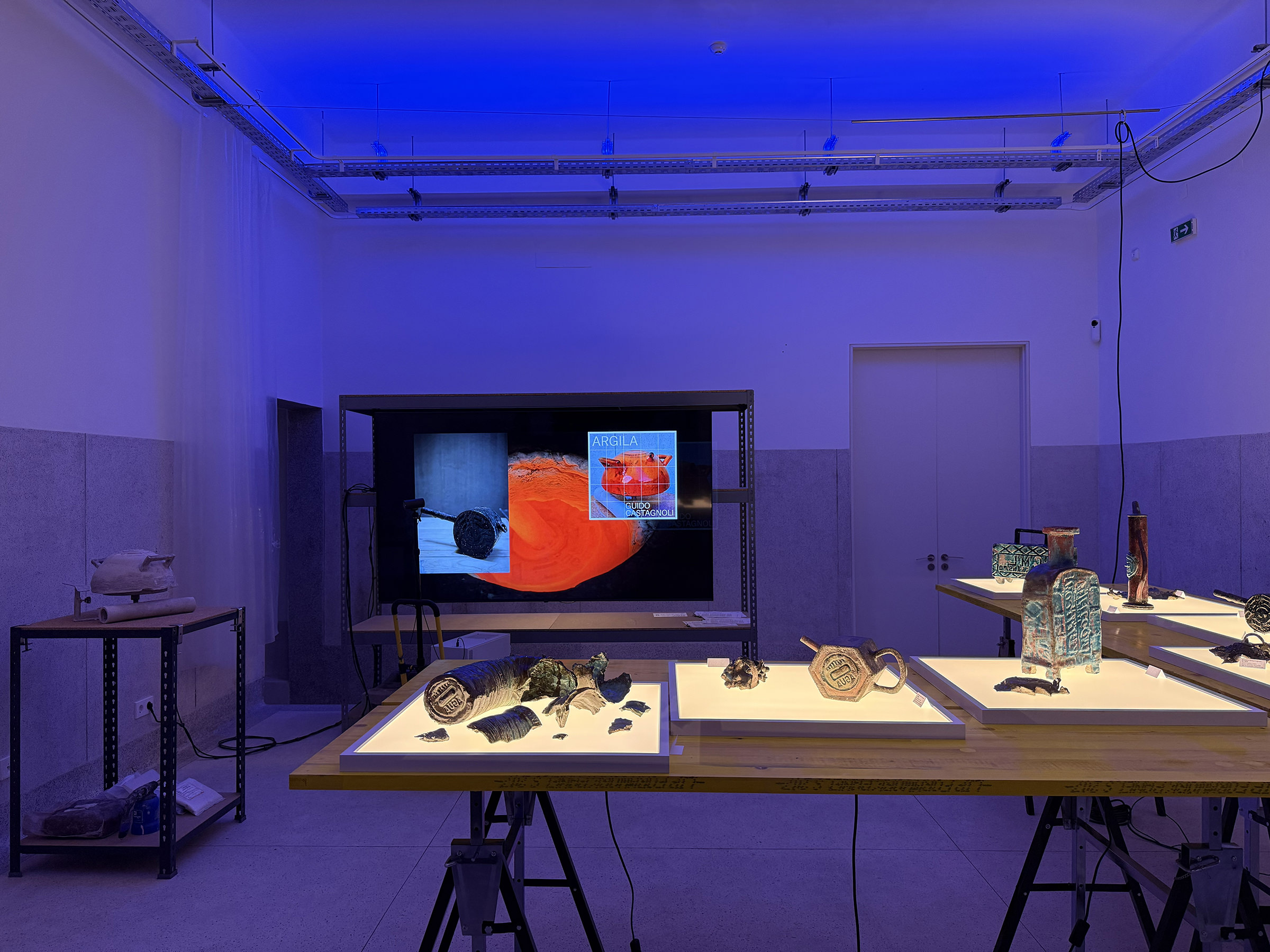
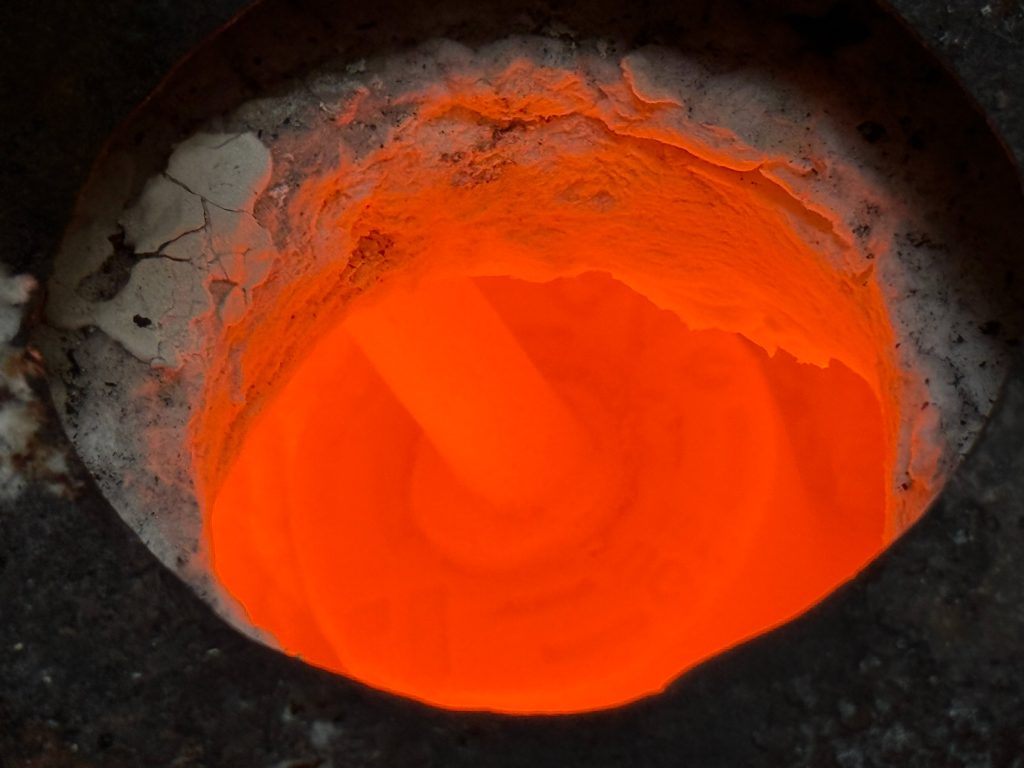
Argila is the artist residency project that brings Guido Castagnoli to SPACE ZERO. It proposes an investigation into the manual and performative dimensions of ceramic practice in direct relation to the exhibition space and its surrounding urban context. Developed within a storefront open to the neighborhood, the work unfolds over time, allowing the rhythms of ceramics—modelling, drying, firing—to become visible as an integral part of the work.
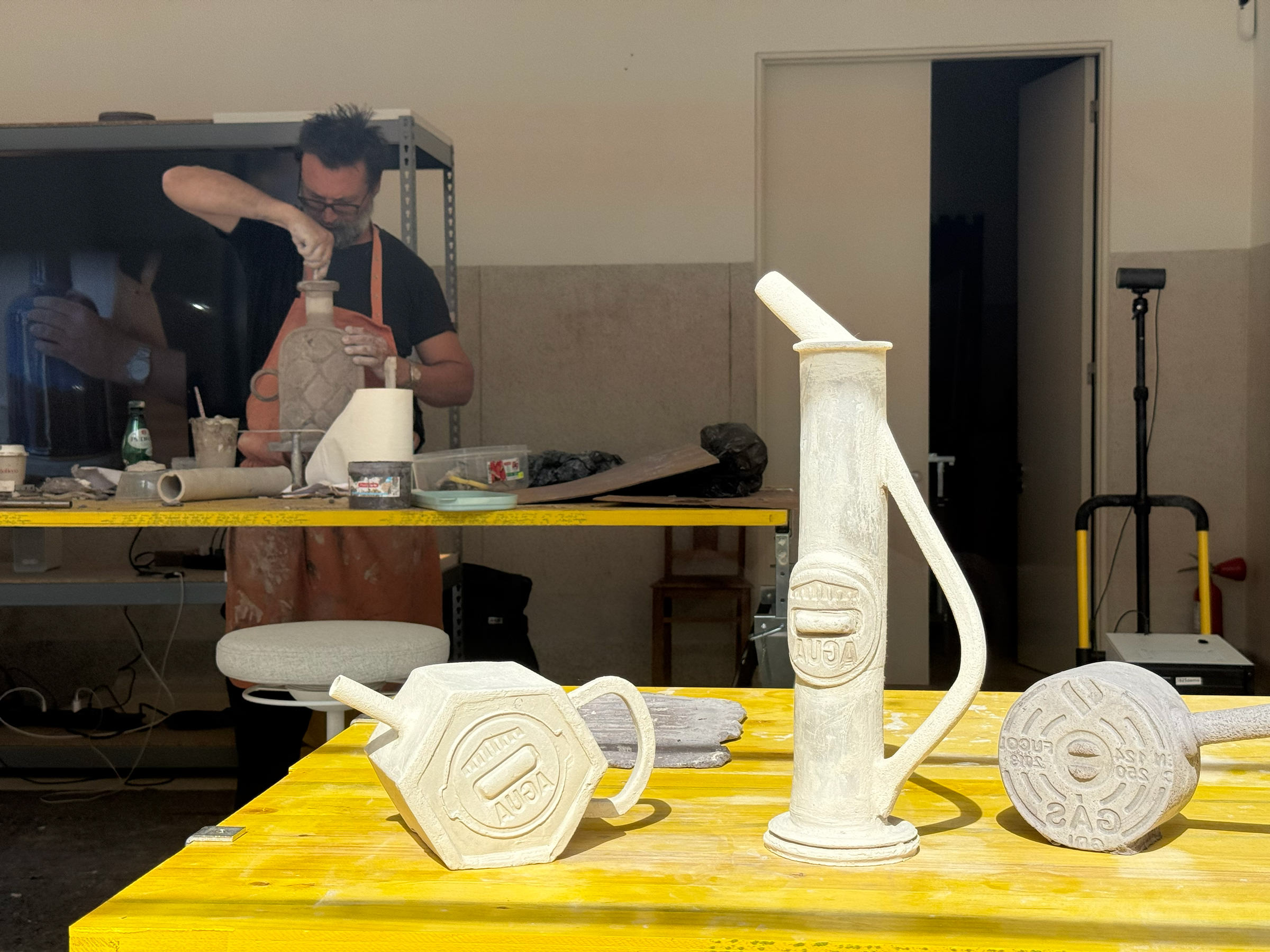
The project explores the tension between artisanal gesture and public exposure, transforming process into a continuous event. While the pieces may evoke utilitarian objects, their forms do not arise from function but from an inner necessity—an oxidative process of memory, both urban and anthropic. Their surfaces carry imprints and textures drawn from the city—gas covers, water lids, street markings—through which the artist inscribes recognizable traces of the urban environment, activating a shared, everyday memory. The works emerge as vestiges, approaching an archaeological condition, yet belonging to a suspended and indeterminate time.
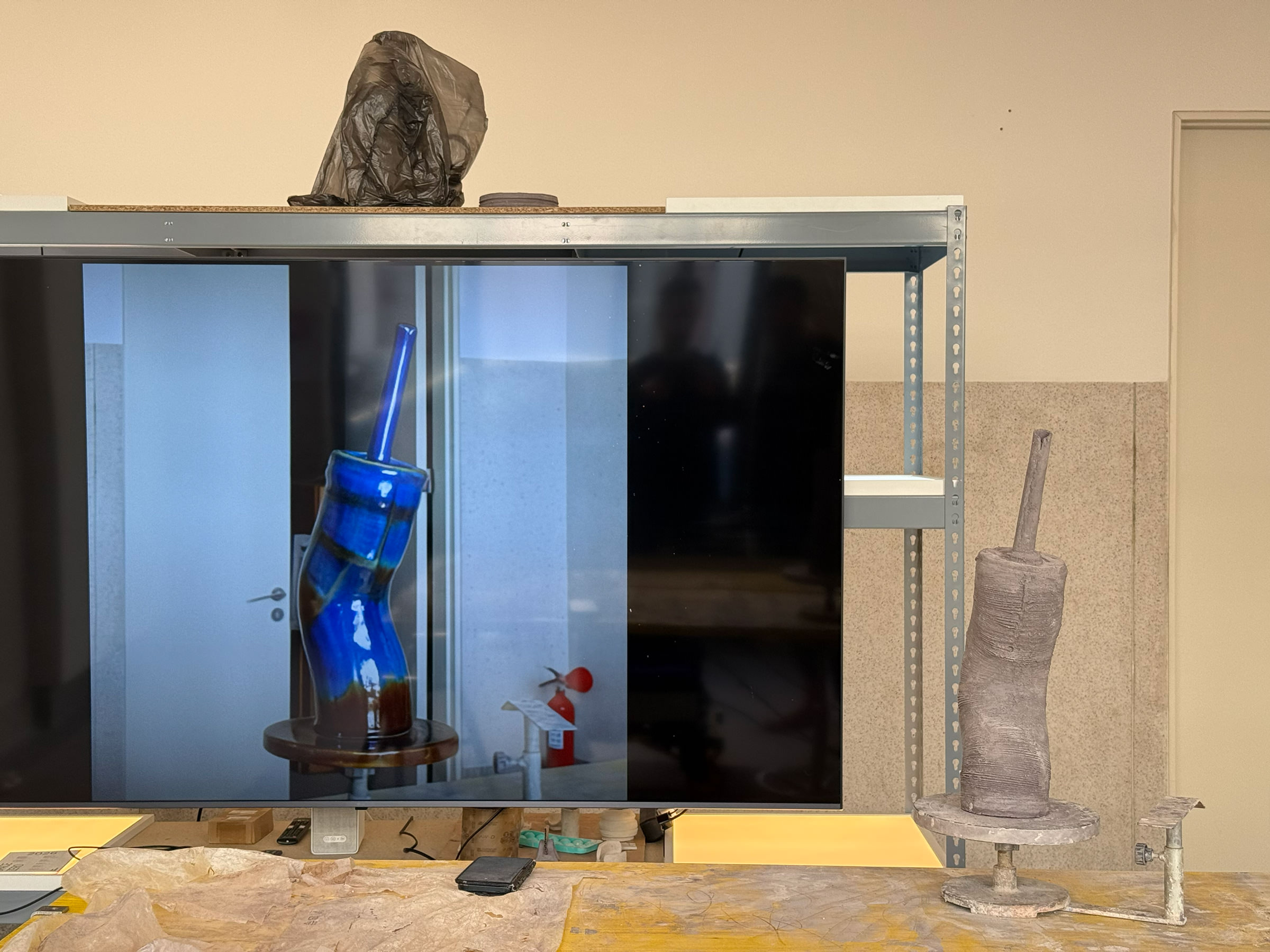
In dialogue with this process, the 18—25 Research Studio has developed an artificial intelligence device that generates, in real time, representations of the works in progress (WIP) as finished renderings. This system anticipates possible future states of each object, introducing a speculative layer that contrasts the slow, material temporality of ceramics with the immediacy of digital imagery.
Argila thus constructs a field of relations between body, matter, technology and territory, where manual practice intersects with systems of prediction and with the observation of urban space, and where the process—more than the final object—emerges as both language and a shared experience with the public.